

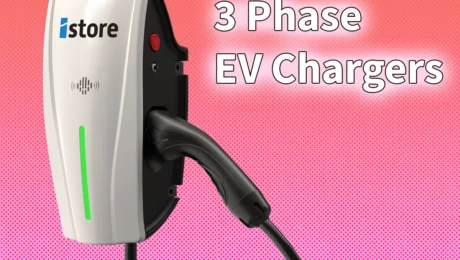
What Is a 3-Phase EV Charger? Benefits, Charging Speed, and Installation
Charging your electric vehicle (EV) shouldn’t feel like waiting for paint to dry. You’ve got places to go and people to see! If charging via your current setup seems to take forever, it’s time to level up.
As EVs surge in popularity across Australia, so does the need for faster, smarter charging at home and at work.
3-phase EV chargers deliver more power, cut down charge times, and keep up with your lifestyle or business demands.
If you want to know what a 3-phase EV charger is, how it boosts charging speed, and what’s involved in installing one, you’re in the right place!
How Does a 3-Phase EV Charger Work?
A 3-phase EV charger uses a 3-phase power supply, which sends electricity through three separate wires at the same time. Because more power flows to your EV, it charges much faster than standard single-phase setups.
Think of it like filling up a water tank with three hoses instead of one!
Most modern EVs are designed to handle 3-phase charging, so you don’t need to worry about whether your car can keep up. And if your home or commercial site already has 3-phase power installed, you’re in a great position to take advantage of the faster charging a 3-phase EV can offer.
Benefits of 3-Phase EV Chargers
Faster charging isn’t the only advantage of 3-phase EV chargers.
- Efficiency: Higher power delivery means less energy loss during charging and less time drawing power from the grid, making your charging setup more energy-efficient overall.
- Scalability: Great for growing households or expanding commercial fleets. A 3-phase setup can handle multiple EVs and future upgrades without major changes to your existing electrical infrastructure.
- Future-Proofing: EV batteries are getting bigger. Installing a 3-phase charger now means you’re ready for the next generation of electric vehicles if you decide to upgrade your EV in future.
- Versatility: Perfect for both residential and commercial use, especially when faster turnaround times are essential, such as for households with multiple EVs, rideshare drivers, delivery vans, or business fleets.
- Compatibility with Solar: If you’ve got solar panels and a 3-phase solar inverter, you can make use of your available solar energy for more efficient and sustainable charging, reducing reliance on the grid and cutting energy costs.
Charging Speeds: 3-Phase vs. Single-Phase
Just how much faster can a 3-phase EV charger charge than a single-phase charger?
Single-phase chargers typically offer power outputs between 3.6 kW and 7.4 kW. Charging a 60 kWh battery with a 7.4 kW charger takes approximately 8 hours.
3-phase chargers can deliver between 11 kW and 22 kW, reducing the charging time for the same 60 kWh battery to about 3 hours. That’s almost 2.5 times faster charging!
Benefits of Fast Charging
Faster charging can make a big difference to your daily life.
- Convenience: Spend less time waiting and more time driving. Ideal for busy families, shift workers, or anyone on the go who needs to charge between school runs, meetings, or deliveries.
- Less Range Anxiety: Planning a road trip? Faster charging means shorter stops along the way and more confidence when driving longer distances.
- Easier Charge Sharing: In households or businesses with more than one EV, faster charging helps avoid delays and makes it easier to share a charger.
- More Flexibility: You’re not tied to charging overnight. You can plug in during the day and still get a full charge in just a few hours.
- Keeps Your Business Moving: For businesses, fast charging means less downtime for vehicles and more time on the road, boosting productivity and profits.
It’s important to know that fast charging can increase power consumption, so consider your energy needs and budget before investing in a 3-phase EV charger.
Who Should Consider a 3-Phase EV Charger?
| Typical User Situation | Single-Phase EV Charger | 3-Phase EV Charger | Reason |
| Single EV household | ✓ | Lower cost and sufficient overnight charging | |
| Apartment or townhouse with limited power | ✓ | Fits standard residential power supply and is easier to install | |
| Home or business with multiple EVs | ✓ | Supports faster charging and simultaneous charging of multiple vehicles | |
| Rideshare or delivery driver working daily | ✓ | Faster charging between shifts or during short breaks | |
| EV owner with residential or commercial solar energy setup | ✓ | Maximises the solar energy available from a 3-phase inverter for more eco-friendly and cost-effective charging | |
| Public or shared EV charging stations | ✓ | Ensures quick charging turnaround and high availability for multiple users |
How to Install a 3-Phase EV Charger
Site Assessment
Before installing a 3-phase EV charger, the first step is to check whether your property has 3-phase power available. Many newer homes and commercial buildings do, but older properties may only have single-phase power.
3-phase chargers require a compatible electrical supply. If your property doesn’t have a 3-phase system, an upgrade may be possible, but it will involve added costs and coordination with your energy provider.
A licensed electrician will carry out the site assessment. They’ll inspect your switchboard, meter, and main power supply to confirm whether 3-phase is installed and meets the EV charging requirements. If not, they can advise on what upgrades are needed and provide a quote.
It’s also a good time to assess things like charger placement, cable runs, and whether solar integration is part of the plan.
Equipment
You’ll need
- A 3-Phase EV Charger: Compatible with 3-phase power and supporting your EV’s onboard charging capacity.
- Wiring and Circuit Protection: Heavy-duty cabling rated for higher current, along with proper circuit breakers and safety switches.
- Mounting Hardware: Secure and weather-resistant hardware for wall-mounting or a stand.
Professional Help
Installing a 3-phase EV charger is not a DIY job! It involves working with high-voltage power and must comply with Australian electrical standards. Hiring a licensed electrician is non-negotiable.
They will make sure your setup is safe, reliable, and suited to your power supply and charging needs. They’ll also take care of any required certifications or paperwork.
What does the installation process involve?
Your installer will
- Confirm that your property has 3-phase power and that your switchboard is compatible.
- Install the charger, wiring, and any necessary safety devices, like circuit breakers or RCDs (safety switches designed to prevent electric shock).
- Secure the charger to a wall or stand in the chosen location (usually near your parking area).
- Connect the charger to your power supply and run safety and performance tests.
- Integrate the charger with your solar energy and battery system, if you have one.
- Show you how to use the charger and explain scheduling or solar integration features.
- Sign off on any required documentation to confirm the installation meets Australian standards.
Costs
The cost to install a 3-phase EV charger varies based on charger type, existing electrical infrastructure, and installation complexity.
3-phase EV chargers range from $1,000 to $1,300, depending on brand, features, and power output. Chargers with app control, load balancing, or solar integration may cost more but offer added convenience and efficiency.
General installation costs are as follows:
- Basic Installation: $500–$1,000 for properties with existing 3-phase power and minimal modifications needed.
- Complex Installation: $1,000–$2,500 for setups requiring longer cable runs, switchboard upgrades, or other modifications.
- 3-Phase Power Upgrade: $1,000–$3,000 to upgrade a property to 3-phase power, depending on location and existing infrastructure.
So, if your property has existing 3-phase power, the total cost can range from $1,500 to $2,300.
If the installation is complex or your property needs a 3-phase power upgrade, the total cost can be between $2,000 and $3,300.
Keep in mind that some states and territories offer rebates or incentives for EV charger installations. Check local programs to see if you’re eligible.
FAQ
Do I Need 3-Phase Power for an EV Charger?
You need a 3-phase power supply to install a 3-phase EV charger for faster charging.
A single-phase power supply is sufficient for standard home charging using a single-phase EV charger.
How Fast Is a 3-Phase EV Charger?
An 11–22 kW 3-phase EV charger can charge a 60 kWh battery in about 3 hours. That’s up to 2.5 times faster than a single-phase charger.
Can I Install a 3-Phase EV Charger at Home?
If your home has a 3-phase power supply, a licensed electrician can install a 3-phase EV charger. If not, you’ll need to upgrade your electrical system.
How Much Does It Cost to Install a 3-Phase EV Charger?
If your home already has 3-phase power, installation typically costs $1,500 to $2,300, including the charger.
If a power upgrade is needed, the total cost can rise to $2,000 to $3,300, depending on the setup and location.
Upgrade to a 3-Phase EV Charger With iStore
Power up in less time and keep moving with a 3-phase EV charger. You’ll get faster, more convenient top-ups and room to grow—perfect for busy households and businesses.
At iStore, we don’t just supply EV chargers; we deliver trusted, high-quality EV charging solutions backed by expert installation and support.
Explore the best 3-phase EV charger in Australia from iStore. Then, get in touch for advice or a quote by calling 1300 515 640 or filling out this online form.
- Published in General
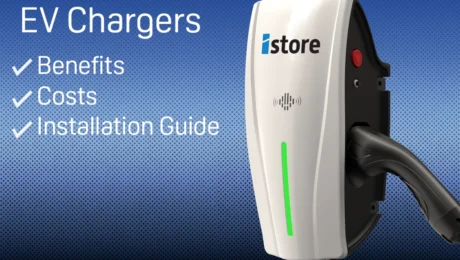
How a Solar EV Charger Works – Benefits, Costs, and Installation Guide
You’ve already cut your carbon footprint by switching to an electric vehicle, but why stop there? Power your EV with sunshine to take clean driving to the next level!
If you have solar panels (or plan to), a solar EV charger lets you skip the grid and charge straight from your roof. It’s clean, convenient, and seriously satisfying!
In this guide, you’ll find out how solar-powered EV chargers work, why they’re a smart move, how much they cost, and what’s involved in installing one.
How Does a Solar EV Charger Work?
A solar EV charger uses power generated by rooftop solar panels to charge your electric vehicle.
When the sun hits your panels, a solar inverter converts the sunlight into usable electricity. This electricity flows through your switchboard to the EV charger, delivering power to your vehicle’s battery to charge it.
If your solar system includes a solar battery, any energy generated during the day that your home doesn’t use can be stored to charge your EV later when the sun isn’t shining, like at night or during cloudy weather. Using stored solar power helps you get the most out of your system and reduce reliance on grid electricity, keeping charging costs down.
Smart EV chargers take solar charging a step further. They track when your solar system produces the most energy and automatically adjust charging times for maximum efficiency. Some models connect to an app, so you can monitor charging, set schedules, and optimise energy use from your phone.
Benefits of Solar EV Chargers
- Cost Savings: Use free solar energy to charge your EV and reduce reliance on expensive grid electricity, especially during peak hours when demand and rates are highest.
- Sustainability: Lower your carbon footprint by powering your vehicle with renewable energy from the sun instead of electricity generated from fossil fuels like coal or gas.
- Convenience: Charge at home during the day or night without queuing at public charging stations.
- Government Incentives: Federal and state-based incentives for installing solar batteries aim to make solar EV charging more accessible and affordable for Australians.
- Federal Cheaper Home Batteries Program: Starting July 1, 2025, this program offers up to a 30% reduction in the cost of home batteries, potentially saving households up to $4,000.
- State-Based Rebates: Various states provide additional incentives. For example, New South Wales offers up to $2,400 off the installation cost of a solar battery for homes and businesses with existing solar.
Technical Requirements
Before installing a solar EV charger, you must make sure it’s technically compatible with your EV, solar system, and home electrical infrastructure.
Consider
- Your EV and Solar System Specs: Review your EV’s charging capabilities and your solar system’s output. Confirm that your panels generate enough electricity to support regular charging based on your driving habits.
- Wattage and Voltage Compatibility: Your EV charger should match the voltage of your home’s electrical system and the capacity of your solar setup. Most home EV chargers in Australia operate on single-phase (up to 7.2 kW) or three-phase power (up to 22 kW).
- Solar Panel Efficiency: Not all solar panels perform the same. High-efficiency panels convert more sunlight into electricity, producing plenty of power even if you have limited roof space for panels.
- Battery Storage: Adding a solar battery lets you store excess solar energy for later use, which is ideal for overnight EV charging or when solar generation is low.
- Your Charger’s Charging Modes: EV chargers have different charging modes (Level 1, 2, and 3). Level 2 is the most common for home solar setups and is suitable for daily use. It provides faster, safer, and more efficient charging than a standard household power point (Level 1).
Choosing the Right Solar EV Charger for Your Home
Once you’ve covered the technical basics, choose a solar-powered EV charger that fits your lifestyle, budget, and future plans.
Look for
- Smart, High-Quality Features: Smart chargers with app connectivity let you schedule charging, monitor energy use, and prioritise solar power over grid electricity. iStore EV chargers feature user-friendly monitoring, built-in safety protections, and high energy efficiency.
- Solar Compatibility Settings: Some chargers are built specifically for solar use, with features like solar-only charging or dynamic load balancing. These features help maximise your available solar energy without drawing from the grid.
- Installation Suitability: Consider cable length, mounting options, and whether a pedestal or wall mount suits your space better.
- Scalability: Planning to upgrade your solar system, battery, or even get another EV down the track? Choose a charger that supports load sharing or future upgrades so you won’t need to replace it later.
- Brand Reliability and Support: A reputable brand should offer solid customer support, warranty coverage, and local technical service for peace of mind.
Costs and Installation of Solar EV Chargers
Charger type, brand, and installation complexity influence the overall cost of installing an EV solar charger.
The price for a Level 2 charger can range from $1,000 to $2,500. Basic installation can cost between $500 and $1,000, while complex installation requiring a switchboard upgrade or longer cable run can cost $1,000 to $3,000.
What if you’re starting from scratch and don’t have a solar system yet?
For a typical 5-6 kW residential solar system, solar panels can range from $5,000 to $9,000. A bigger 10kW system can cost between $7,500 and $10,500.
An optional 5 kWh solar battery can cost $9,800, and a 15 kWh battery can be up to $18,500.
Now that you have an idea about prices, let’s look at what the installation process involves.
- Site Assessment: A licensed electrician will evaluate your home’s electrical system, solar setup, and EV charging needs.
- Installation: They’ll mount the solar EV charger, connect it to your home’s electrical system, and link it with your solar inverter and battery if applicable. They may also install safety switches or upgrade components like the switchboard to meet Australian safety standards.
- Testing and Commissioning: After setup, the installer will test the charger’s performance, check for any electrical faults, and confirm that the system charges your EV safely. They’ll also walk you through how to use it.
Solar Panel Considerations
Your solar panel setup needs to be up to the task of charging your EV.
Keep in mind
- System Size: A solar system of 6.6 kW or more is recommended to generate enough power for household use and EV charging.
- Inverter Capacity: Your solar inverter must handle the combined load of your household and EV charging needs.
- Roof Space: More panels mean more energy, but you’ll need the roof space to match. High-efficiency panels can help if space is limited.
- Panel Orientation: North-facing panels will maximise solar generation throughout the day.
- Daytime Charging Habits: Solar energy is most available during daylight hours. Charging your EV during the day will let you use more solar power, especially if you don’t have a battery.
- Future Expansion: If you plan to add another EV or a home battery later, consider oversizing your solar system to avoid costly upgrades later.
Battery Life and Performance
When managed correctly, solar charging is generally gentle on EV batteries.
Unlike fast public chargers that deliver high-power bursts, home solar chargers provide a slower, steadier charge. This charging speed reduces heat and stress on the battery, preserving its lifespan.
Charging during the day directly from solar generation, or overnight using stored battery energy, allows for a more controlled charge-discharge cycle. Avoiding frequent full charges and letting the battery drain fully also contributes to longer battery life.
Many EVs and smart chargers have apps that track charging habits, battery temperature, and state of charge. Using these tools helps you monitor performance, adjust your charging times, and maintain your battery’s long-term efficiency.
FAQs
Can I Charge My EV Directly With Solar Panels?
Yes, but you’ll need a compatible inverter and EV charger to convert and manage the solar energy for vehicle charging.
How Much Does It Cost To Install a Solar EV Charger?
A Level 2 solar-powered EV charger can range from $1,000 to $2,500.
Basic installation can cost between $500 and $1,000, while complex installation requiring a switchboard upgrade can cost $1,000 to $3,000.
Do I Need a Battery for My Solar EV Charger?
A battery isn’t required for an EV solar charger, but it helps. Without one, you can only charge during daylight hours. A battery lets you store excess solar energy for nighttime or cloudy-day charging.
How Long Does It Take To Charge an EV With Solar Energy?
Charging time depends on solar system size, charger type, and EV battery capacity. With a typical 7 kW home charger and good solar conditions, a full charge can take 6–10 hours.
Drive Into the Future With an iStore Solar EV Charger
Why pay for power when the sun gives it away for free?
An EV solar charger charges your EV using free, renewable energy from your rooftop. It’s sustainable and eco-friendly, and will save you cash!
Explore iStore’s solar EV chargers today to drive smarter. Then, get in touch for expert advice or a quote by calling 1300 515 640 or filling out this online form.
- Published in General
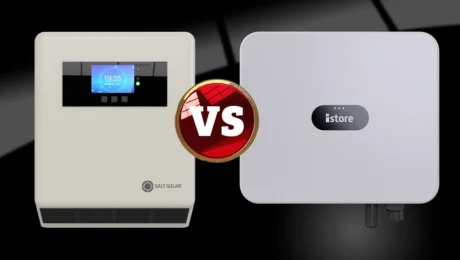
Inverter vs Solar Inverter: How to Choose the Right Solution for Your Home
Choosing Between an Inverter and Solar Inverter: A Homeowner’s Guide
About one in three Australian homes now have rooftop solar. Are you thinking of joining the club? If so, you’d be making a smart move! Solar energy is one of the most effective ways to cut your power bills.
You’ve likely done your research on solar panels, but what about inverters? This little box makes solar panels useful. No inverter? No power to your fridge, lights, or TV!
Not all inverters are the same. A regular inverter and a solar inverter have different jobs, and picking the wrong one could mean wasting energy—or worse—wasting money.
What are the differences between the two, how can you choose the right inverter, and why is Australian-owned iStore a name you can trust when it comes to powering your home with solar? Let’s find out!
What Is an Inverter?
A regular inverter is a device that converts direct current (DC) electricity from a battery, car, generator, or off-grid system into alternating current (AC).
Most household appliances run on AC power. So, if you have a battery or another source producing DC power, you’ll need an inverter to make that electricity usable in your home.
How Does an Inverter Work?
DC power flows in one direction, while AC power switches direction rapidly, which is the kind of electricity that comes through your power points. A regular inverter uses internal electronics to convert the one-way flow of DC into the back-and-forth flow of AC, so your home’s devices can run smoothly and safely.
In non-solar setups, you can use these inverters to
- Power appliances during blackouts with stored battery power from backup systems.
- Run devices from a car or portable batteries while camping, in a caravan, or on a boat.
- Support off-grid living in remote homes or properties with generators or battery banks.
What Is a Solar Inverter?
When solar panels collect sunlight, they produce electricity in the form of direct current. A solar inverter converts this DC electricity into AC electricity. Without a solar inverter, the energy from solar panels wouldn’t be compatible with appliances or the power grid.
How Does a Solar Inverter Work?
In a typical grid-tied residential solar system, a solar inverter constantly monitors how much electricity the home needs. It sends the converted AC power straight to appliances first.
If your solar panels produce more energy than your home needs, the inverter routes that extra electricity back into the power grid. Your electricity provider usually gives you credits for the exported energy through a feed-in tariff.
A solar inverter can also work with solar batteries to store excess DC electricity generated during the day. When your home needs power at night or during cloudy weather, the inverter draws this energy from the batteries.
Solar Inverter Benefits for Your Home
Energy Efficiency
With a solar inverter converting solar energy into usable power for your home instantly, you can run your appliances during the day without relying on grid electricity.
Any extra power your home doesn’t use is sent to the grid. If you have a solar battery, that excess energy can be stored for later, so you can keep using solar power at night or during cloudy weather instead of switching to grid power.
Some solar inverter models come with smart features that track your usage and adjust output to match your needs. That means less waste, lower power bills, and more control over how your home uses energy.
Cost Savings
Using solar energy allows you to rely less on electricity from the grid, which translates to lower electricity usage charges.
Your electricity provider may pay you through feed-in tariffs for any extra solar energy you don’t use and send back to the grid. Over time, these savings can add up and help offset the cost of your solar setup.
Sustainability
Choosing a solar inverter supports a more sustainable way of living and a cleaner energy future for Australia.
When you use solar energy, you reduce your reliance on electricity that comes from fossil fuels like coal and gas. The results? Fewer carbon emissions and a smaller impact on the environment.
In 2024, rooftop solar made up 12.4% of all solar electricity generated in the country, up from 11.2% in 2023. More and more households are contributing to Australia’s clean energy, and you can too!
Reliability
A solar inverter makes your home’s energy setup more reliable by keeping your power supply steady and managing how and when solar energy is used.
In off-grid or hybrid setups with backup generators or battery storage, the inverter can automatically switch between solar, battery, and generator power. That way, your home stays powered even if the weather changes or there’s a grid outage.
Why Choose iStore for Your Inverter Needs?
Affordability
At iStore, we believe every Australian household should have access to solar power so they can cut their energy costs and reduce their environmental impact. That’s why we price our solar inverters competitively within the Australian market.
They’re affordable while delivering advanced safety and monitoring features and long-term durability.
To add even more value, we offer free shipping and exclusive promotions. For example, if you purchase an iStore inverter between August 1, 2023, and July 1, 2025, you’ll receive a promotional 2-year warranty extension in addition to the standard 10-year warranty!
Safety
We know how important the safety of your home and family is. We’ve packed our solar inverters with the following safety features.
- AI-Powered Arc Fault Detection: Instead of relying on preset limits that may miss early warning signs, our inverters use artificial intelligence to monitor electrical patterns in real time. This detection system can recognise unusual activity that might lead to arcing and automatically shut down power to prevent damage or fire.
- Arc Fault Circuit Interrupter (AFCI): Identifies dangerous arc faults and cuts off power in under half a second, helping to eliminate potential fire hazards.
- Residual Current Monitoring Unit (RCMU): Constantly checks for stray electrical currents caused by moisture, insulation damage, or wiring faults. Any leakage triggers a safety response to avoid electric shocks, fires, or harm to your equipment.
- Natural Cooling Systems: Natural airflow and heat sinks (metal components that absorb heat and spread it out) regulate temperature and overheating. With no fans or moving parts, these systems cool quietly and minimise wear.
Durability
The best inverter for your home should have an IP (Ingress Protection) 65+ rating for weather protection, heat-resistant components, and robust build quality to withstand extreme temperatures, humidity, and dust.
iStore single-phase solar inverters are rated IP65. They’re dust-tight, protected against water jets, and suitable for both indoor and outdoor installations.
Our three-phase inverter models are rated IP66, offering enhanced protection and durability in harsher outdoor environments.
User-Friendly Features
iStore solar inverters are easy for installers to install and customers to use.
What makes them so?
- Simple Installation and Setup: Clearly marked wiring points, flexible mounting options, and a straightforward interface help installers get the job done faster and reduce the chance of mistakes.
- User-Friendly Display: A built-in screen shows key system information so you can see how everything’s working at a glance.
- Real-Time Energy Monitoring: Wi-Fi or Bluetooth connectivity enables you to check how much energy your system is making and using through an app or online, anytime, anywhere.
- Automated Alerts and Diagnostics: The system spots problems early, sends you a warning, and shows what’s wrong so you can fix issues quickly before they affect performance.
Australian Expertise
iStore is a proudly Australian-owned, family-run company. We understand what Australian families need when it comes to solar energy.
They need solar solutions that perform reliably and safely in local conditions, backed by strong warranties. We offer a 10-year warranty on our inverters to give you confidence your system will keep performing for years to come: rain, hail, shine, or anything in between.
We’re also committed to providing comprehensive customer support, including technical advice, installation and user manuals, and direct access to local solar experts and technicians.
Our Range
5kW/6kW Single-Phase Hybrid Inverters
Our single-phase inverters are perfect for most homes, connecting to standard single-phase power setups.
The 5kW/6kW hybrid inverter model includes
- Dual MPPT (Maximum Power Point Tracking): Tracks and adjusts solar panels to operate at their most efficient, even under changing conditions like partial shade.
- IP65-Rated Housing: Built to resist dust and heavy rain.
- Quiet Operation: Under 30dB.
- Remote Access: Monitor the performance of your solar system from anywhere through the iStore app.
10kW Single-Phase Hybrid Inverters
The 10kW hybrid inverter model is suited to higher energy demands or larger homes. It features
- 3 MPPT Inputs: For advanced energy optimisation, especially in panel setups facing different directions or on multiple roof sections.
- 3 PV String Inputs: Connect up to three separate groups of solar panels for flexible system design and better performance across changing sunlight conditions.
- Efficiency: Up to 98.1%, meaning more sunlight gets turned into usable energy.
Factors to Consider When Choosing an Inverter
- Energy Needs: How much electricity does your household use daily? Check your last electricity bill. A larger home or one with high energy usage (pools, EV charging, or people working from home) may need a more powerful inverter.
- Efficiency: The higher the efficiency rating, the more solar energy is turned into usable power. Look for an inverter with 96% efficiency or higher to get the most out of your system.
- Compatibility: Make sure the inverter you choose works with your home’s grid connection (single or three-phase) and any future upgrades, like adding a solar battery or expanding your panel setup.
- Durability: Australian weather can be harsh, so check the inverter’s IP rating. An IP65 rating or higher means it’s protected against dust, rain, and heat and is suitable for outdoor installations.
- Cost vs. Benefits: While cheaper inverters might be appealing, investing in a quality inverter can save you more money in the long run through better performance, less maintenance, and longer warranties.
FAQs
What Is the Difference Between an Inverter and a Solar Inverter?
A regular inverter converts direct current (DC) electricity from a battery, car, generator, or off-grid system into alternating current (AC) that a home can use, while a solar inverter converts the DC electricity produced by solar panels into AC power.
Can You Use a Standard Inverter With Solar Panels?
A standard grid-tied inverter can be used with solar panels; however, it must be a solar-compatible inverter designed to work with a solar energy system. Regular inverters that aren't made for solar lack key features like Maximum Power Point Tracking, system monitoring, and grid export controls.
For safety, performance, and compliance with Australian standards, it's best to use a dedicated solar inverter or hybrid inverter with a solar panel setup.
Are Solar Inverters More Energy-Efficient Than Standard Inverters?
Yes. Solar inverters work specifically with solar panels and use smart features to maximise energy output. They convert more solar energy into usable power, making them more efficient than standard inverters in a solar setup.
How Long Do Solar Inverters Last?
Most solar inverters last between 10 and 15 years, depending on the type, quality, and local conditions. Some high-quality models can last up to 25 years with proper care and regular maintenance.
Power Your Home Smarter with iStore’s Energy Solutions
Power your home smarter and sustainably while saving seriously on energy costs with an iStore solar inverter.
Explore our range of the best solar power inverters in Australia. Then, call 1300 515 640 or fill out this online form. We’ll answer your questions, give you a quote, and help organise installation.
Don’t wait to get in touch—take the first step toward enjoying iStore solar inverter benefits today!
- Published in General
Unlock the Power of a 3 Phase EV Charger
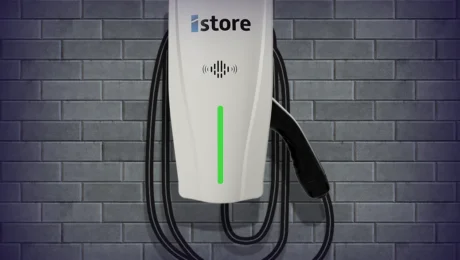
Your EV is parked, your battery is low, and your phone tells you it will take hours to charge at the nearest public charger. It’s a little ironic—driving into the future, only to be stuck waiting on yesterday’s infrastructure!
A home 3 phase EV charger changes the game. Fast, reliable, and ready when you are.
iStore EV chargers are built for Aussie homes, priced to suit real budgets, and engineered for effortless charging.
Let’s explore how to choose the best home EV charger in Australia.
What is an EV Charger?
An EV charger is a device that uses electricity from your home’s power supply to charge the battery in your electric vehicle (EV) so you can drive it.
Why a Home EV Charger Is Essential for Australian EV Owners
Public charging stations are handy in a pinch, but they’re not always practical. Queues and slow charging speeds add up to wasted time. A home EV charger puts you back in control. Just plug in overnight and wake up to a full battery.
This convenience is even more important in suburban and regional areas of Australia, where public chargers can be few and far between. With a home charger, you’re not relying on limited infrastructure or planning trips around charge stops. Your garage becomes your personal charging station.
Then there are the long-term savings. Charging at home is often cheaper than using public stations, especially if you plug in during off-peak hours when electricity demand is lower and rates are reduced, like late at night or early in the morning.
Pair your EV charger with rooftop solar, and you can drive on sunshine, cutting your energy costs even further and reducing your carbon footprint!
EV Charger Types
Level 1 Chargers
Home EV chargers typically use alternating current (AC) to charge vehicles.
Level 1 AC chargers that often come with an EV plug into a standard 230-volt (V) household outlet and typically deliver up to 2.4 kilowatts (kW) of power.
They provide a driving range of around 8–15 km per hour of charging and can take up to 20 hours to fully charge a vehicle. This slower charging rate makes them suitable for overnight charging if you drive short distances daily.
Level 2 Chargers
Level 2 AC chargers require a dedicated 240 V circuit and professional installation. They add about 30–40 km of driving range per hour and can take 4–8 hours to charge an EV fully. This faster charging speed is ideal for longer daily commutes and households with multiple EVs.
These chargers are available in single-phase (up to 7.4 kW) or three-phase (up to 22 kW). Most homes in Australia use single-phase power, which is fast enough for overnight charging. However, if your home has three-phase power—common in newer or larger properties—you can charge even faster.
Dumb vs Smart Chargers
“Dumb” EV chargers simply deliver power to your EV. They
- Don’t have any smart features or app control.
- Are easier to install and less expensive.
- Charge at full power the moment they’re connected, regardless of electricity pricing or solar availability.
- Are suitable for EV owners needing a basic charging solution.
Smart EV chargers do much more than just charge your EV. They
- Optimise energy usage by adjusting charging times based on grid demand, solar availability, and your electricity tariff schedule.
- Reduce electricity costs thanks to their energy efficiency.
- Connect to the internet to monitor charging in real-time, set schedules, track energy usage, and receive notifications through an app.
- Are suitable for EV owners wanting cost-effective charging or using rooftop solar.
Key Features To Look For in the Best Home EV Charger in Australia
- Compatibility: The charger must be compatible with your EV’s plug type and charging capacity.
- Charging Speed: Look for a charger that matches your daily driving needs. Most Level 2 chargers offer between 7.4 kW and 22 kW, which can significantly reduce charging times compared to a standard plug.
- Installation Requirements: Check if your home has single-phase or three-phase power. Some chargers also require a dedicated circuit or additional switchboard space, so confirm if any upgrades are needed before purchasing.
- Affordability: Weigh up the upfront cost of the charger with the long-term value. Features like smart charging, solar integration, or load balancing may cost more upfront but can save you money over time.
- Safety Features: Look for safety certifications, built-in protection against overvoltage or overheating, and weatherproof casing for outdoor installation.
- Easy to Use: The best chargers are intuitive, with app control, clear indicator lights, and simple plug-in functionality. Wall-mounted units with cable holders also keep things tidy.
- Sustainability: If you have solar panels or plan to install them, choose a charger that supports solar optimisation.
Apartment EV Charging and Body Corporate Considerations
Limited access to personal power supply, shared parking spaces, and a lack of installation space can make installing an EV charger in an apartment complex complicated.
You’ll also likely need approval from your body corporate before any electrical work begins. This process may involve submitting detailed installation plans that show how costs and electricity usage will be managed, and ensuring there is no impact on other residents.
How To Install and Use a Home EV Charger
- Hire a Licensed Electrician: Home EV charger installation must be done by a licensed electrician. They’ll assess your switchboard, wiring, and power supply, and let you know if any upgrades are needed before installation.
- Choose the Installation Location: Most chargers are wall-mounted in a garage or carport near where your vehicle is parked. If that’s not possible, some models have pedestal or outdoor mounting options.
- Connect and Charge: Just plug the charger into your EV, and charging will begin automatically. If you have a smart charger, you can control the start and stop times and schedule off-peak charging using an app.
- Maintain Your Charger: Keep the unit clean, check for visible wear, and follow any guidelines from your installer or manufacturer.
Why Choose iStore for Your Home EV Charging Needs?
iStore is a proudly Australian-owned, family-run company. We’re committed to providing Aussie families with competitively priced EV chargers that don’t compromise on performance or safety.
We believe all households should have access to renewable energy solutions. Our EV chargers support eco-conscious electric vehicle driving and charging, helping to reduce reliance on fossil fuels.
If you have an iStore hybrid inverter and solar battery as part of a solar energy system, an iStore home EV charger will seamlessly work with them to maximise energy efficiency and electricity savings when charging your EV.
Our chargers are also durable and weather-resistant, delivering reliable performance even in harsh local climates.
FAQs
What Is the Best Home EV Charger in Australia?
The best home EV charger in Australia is the one that’s compatible with your EV, offers a charging speed that suits your lifestyle, and works with your home’s power supply.
Features like solar compatibility, smart charging, and remote access can enhance usability, improve efficiency, and help lower running costs.
How Much Does It Cost to Install a Home EV Charger in Australia?
That depends on the charger type, installation complexity, and any electrical upgrades. On average, you can expect to pay between $1,200 and $3,300, which includes the charger unit and professional installation.
Can I Charge My EV With Solar Power at Home?
Yes, you can charge your EV with solar power by connecting the charger to your rooftop solar system. A compatible EV charger can draw power directly from your solar panels, helping reduce grid reliance and charging costs.
How Long Does It Take to Charge an EV at Home?
A Level 1 charger can fully charge an EV in up to 20 hours, while a Level 2 charger can take 4–8 hours.
Ready To Upgrade to the Best Home EV Charger in Australia?
We’re not shy in saying that we have the best home EV chargers in Australia.
Why?
They’re durable, reliable, cost-effective, and environmentally friendly!
Explore the best home EV chargers in Australia from iStore. Then, get in touch for advice or a quote by calling 1300 515 640 or filling out this online form.
- Published in General
Portable EV Charging Solutions – Stay Powered Anywhere, Anytime
Electric vehicles are taking off across Australia, from city streets to outback tracks.
But whether you’re zipping through traffic or enjoying a road trip exploring this beautiful but remote land of ours, staying charged shouldn’t mean staying stuck.
iStore’s portable EV chargers are to the rescue! They’re affordable, high-quality, and ready to charge when you are. You’ll never be caught off guard, no matter where you’re venturing! Plus, we’re an Australian-owned brand, so you can be sure our portable EV chargers are tailored to tough Aussie road conditions.
Let’s take a closer look at these EV charging solutions.
What Is a Portable EV Charger?
If you have an electric vehicle, you’ve likely wondered, “Is there a portable electric charger option?”
The answer is yes!
A portable EV charger is a compact, plug-in device that lets you charge your EV on the move from a standard power outlet. It typically includes a charging cable, control box, and plug that connects to your car.
Why Portable EV Chargers Are a Must-Have for Australian EV Owners
Owning an EV in Australia comes with its perks but also some challenges.
Charging stations aren’t always where you need them. Long road trips and remote destinations can leave you wondering where your next top-up will come from. And even in the city, public chargers can be taken, out of order, or too far from home.
That’s why a portable EV charger is a game-changer. It gives you the freedom to charge wherever there’s a compatible power point: at home, a mate’s place, a holiday rental, or a powered campsite.
Reducing your reliance on public charging stations can also save you money.
How?
- Public chargers, particularly fast ones, often cost more per kWh (kilowatt-hour) than charging at home.
- Some stations charge idle fees if your car stays plugged in after charging.
- Parking fees at some public charging locations can add to the cost.
- Home electricity rates (especially at off-peak times or if the home is on solar) are usually cheaper.
Features and Benefits of iStore’s Portable EV Chargers
As mentioned at the outset, iStore is a proud Australian-owned company. This gives us an edge over overseas competitors selling portable EV chargers here.
Our local expertise helps us deliver EV charging solutions better suited to Aussie road and weather conditions and your driving habits and expectations.
Here’s exactly what iStore portable EV chargers have to offer.
- Quality: Durable and weather-resistant.
- Competitive Pricing: Affordable without compromising on performance or safety.
- Mobility: Lightweight and compact for easy travel and storage.
- Compatibility: Works with various EV models, including popular Australian EVs.
- Safety: Built-in safety features include temperature monitoring and fault protection.
- User-Friendly: Simple plug-and-play setup, no technical know-how needed.
- Sustainability: Supports eco-conscious EV driving and charging, reducing your reliance on fossil fuels.
- Integration With iStore Solar Energy Systems: If you have an iStore hybrid inverter and solar battery as part of a solar energy system, your iStore portable EV charger will seamlessly work with them to maximise energy efficiency and electricity savings.
How to Choose the Right Portable EV Charger for Your Needs
Look out for the following features to help you choose the right EV portable charger.
- Adjustable Current: A charger with adjustable current settings lets you control the power flow and charge safely from different outlets.
- Charging Speed: A higher charge rate means less waiting time.
- Compatibility: Make sure the charger works with your EV’s make, model, and charging port type:
- Type 1: Mostly found on older Japanese and American EVs (early Mitsubishi Outlander PHEV, Nissan Leaf).
- Type 2: The standard for most modern EVs in Australia (Tesla, Hyundai, Kia, MG).
- CCS (Combined Charging System): A fast-charging option for many newer EV models (Hyundai IONIQ 5, Tesla Model 3) that combines a Type 2 plug with two extra DC (Direct Current) pins.
- Voltage: Check that the charger’s voltage suits your car’s requirements, especially if you plan to charge from different power sources.
- Reviews: Read reviews from other EV drivers to see how the charger performs in real-world use.
- Warranty: A good warranty gives you peace of mind, so always check what’s covered and for how long.
- Customer Support: Go with a brand that’s easy to reach when you have questions. iStore offers local, expert support to help you pick the right portable charger for an EV and get the most out of it.
Safety and Maintenance
Stay safe while charging your EV by
- Always plugging into a properly grounded power outlet. Avoid power points that are damaged or seem unsafe. When in doubt, choose well-maintained, sheltered outlets.
- Avoiding using extension cords or adaptors unless they’re specifically rated for EV charging.
- Not charging in wet or flooded areas. Keep the charger dry and off the ground.
- Checking the cable and connectors for damage before each use.
- Following the manufacturer’s instructions for use.
- Not modifying the charger. Don’t cut the cable, swap plugs, or try to bypass safety features.
Look after your EV portable charger by
- Storing it in a dry, cool place when not in use, preferably in a carry case.
- Wiping down the cable and connectors with a dry cloth to remove dust or moisture.
- Not kinking or tightly coiling the cable, as this can cause wear over time.
- Having it inspected by a licensed electrician or replaced if you notice any signs of fraying or overheating.
FAQs
What Is a Portable EV Charger?
A portable EV charger is a compact device that lets you charge your electric vehicle from any regular power point instead of at a fixed charging station.
Can I Use a Portable EV Charger at Home?
A solar inverter converts DC electricity from solar panels into AC electricity, which powers a home or business. It optimises energy use, protects the solar system from faults, and manages grid interaction.
How Fast Can a Portable EV Charger Charge My Car?
Portable EV chargers are designed to work with standard power points, so you can easily charge your EV at home without installing special equipment.
Are Portable EV Chargers Safe To Carry in the Car?
The charging speed of a portable EV charger depends on its power output and your vehicle’s battery capacity.
Level 1 chargers (1.4–3.7kW) use a standard power point and typically add 10 to 20 km of driving range per hour. They're ideal for overnight charging at home or work.
Level 2 chargers (7–22kW) require a dedicated circuit and can add 30 to 130 km of range per hour, depending on your EV’s configuration.
Check your vehicle’s specifications and the charger’s capabilities to estimate charging times accurately.
Yes, portable EV chargers are safe to carry in the car. Store them in a dry, secure spot like the boot and use a carry case to protect the cable and connectors from damage.
Get Your Portable EV Charger and Stay Powered Anywhere!
No charging bay? No problem! With a portable charger for an EV in your boot, you’ve got flexibility on your side. Charge at home, on the go, or wherever the road takes you. It’s your shortcut to stress-free, reliable charging without the wait, the queues, or the what-ifs.
iStore’s portable EV chargers are built for Aussie drivers, powered by local expertise, and priced so you don’t have to think twice.
Ready to take charge of your EV experience?
Explore the best portable EV chargers in Australia from iStore. Then, get in touch for advice or a quote by calling 1300 515 640 or filling out this online form.
- Published in General
Why Plumbers Prefer iStore Heat Pumps
If you’re a plumber, you know what matters on the job: gear that’s easy to install, built to last, and won’t come back to bite you with call-backs!
More and more customers are asking for energy-efficient, eco-friendly hot water systems, and heat pumps are leading the charge.
iStore heat pumps are trusted by tradies across Australia as one of the most reliable and installer-friendly heat pumps out there.
Why?
Energy Efficiency That Saves Homeowners Money
You’re likely familiar with how a heat pump works: it pulls heat from the air and uses it to heat water. So, instead of burning through electricity like a traditional system, heat pumps use renewable thermal energy.
iStore heat pumps use 75–85% less power than a standard electric water heater! For your customers, this energy efficiency translates to big savings on their power bills.
If they’ve got solar panels—even better. iStore heat pumps can run off solar energy during the day, pushing those savings even further and giving them a more sustainable setup.
Sustainability and Compliance with Australian Standards
Installing an iStore heat pump helps your customers reduce their home’s CO₂ emissions by up to 2.9 tonnes annually. That’s a significant cut compared to traditional electric or gas systems.
Safety-wise, iStore heat pumps meet and exceed Australian Standards. They operate with a low power draw (less than a kettle!) and integrate seamlessly with existing electrical setups. Plus, they use R134a refrigerant, which is non-flammable, low-toxicity, and free from ozone-depleting potential.
Federal Government Incentives
When you install an iStore heat pump for a customer, they may be eligible for Small-Scale Technology Certificates (STCs) under the federal Small-Scale Renewable Energy Scheme (SRES).
These STCs have a dollar value that can be used to reduce the upfront cost of installation, making an iStore heat pump a much more affordable water heating option.
The number of certificates given depends on the system size, location, and energy savings. And with the scheme set to end in 2030, the earlier your customers upgrade, the more they can save!
Easy Installation for Plumbers
iStore heat pumps are quick and straightforward to install.
- Site Preparation: Choose a solid, level base with the clearances specified in the installation manual for proper airflow and maintenance access.
- Plumbing Connections: Connect the cold water inlet and hot water outlet using ¾ inch fittings. Install a 500 kPa pressure reduction valve immediately downstream of the cold water non-return isolation valve.
- Condensate Drainage: Connect the condensate drain to an approved discharge point.
- Electrical Connections: Have a licensed electrician connect the unit to a dedicated 240-volt power supply with an appropriate isolating switch within one metre of the unit.
- Commissioning the Unit: Fill the tank with water by turning on the cold water supply and opening a hot water tap to purge air from the system. Once the tank is full and all air is expelled, switch on the power supply. Set the desired operating mode and temperature using the unit’s control panel.
Our website has detailed installation manuals for the iStore 180L and 270L heat pump models, covering site selection, plumbing connections, electrical requirements, and system commissioning.
You can also check out this FAQ section, which addresses common installation questions.
If you have a specific installation question or need technical advice, contact our helpful support team by calling 1300 515 640, emailing info@istore.net.au, or filling out this online form.
Why Homeowners Love iStore Heat Pumps
- Versatility: The iStore 180L model is ideal for smaller homes or couples, and the 270L model is more suitable for larger families. Getting a system that’s sized right for their household means homeowners avoid wasting energy or running out of hot water.
- Smart Energy Management: Homeowners can control their system’s operation through four smart modes: Hybrid, Eco, Vacation, and Boost. Whether they’re away on holiday, want to save on energy, or need hot water to reheat quickly after heavy use, there’s a mode that fits.
- Long-Term Cost Benefits: By reducing electricity usage and working seamlessly with solar, iStore heat pumps help customers slash their power bills year after year. Plus, STC incentives reduce upfront costs.
- Durability: With stainless steel tanks and robust components, iStore heat pumps can withstand rain, high humidity, and extreme heat for long-term performance and peace of mind.
Check out these iStore heat pump reviews to see why customers love our heat pumps and why plumbers keep recommending them!
FAQs
What Are the Benefits of an iStore Heat Pump?
iStore heat pumps reduce electricity use, lower CO₂ emissions, and work with solar for reliable, sustainable hot water with minimal running costs.
How Much Does It Cost to Install an iStore Heat Pump in Australia?
The cost of an iStore 180L heat pump, including installation, can range from $2,000 to $2,400. A 270L model can cost between $2,400 and $2,800.
Heat pump installation costs vary depending on the model, location, and complexity of the installation.
Are iStore Heat Pumps Noisy?
iStore heat pumps operate at noise levels similar to a household fridge, around 45 or 46 decibels. Proper installation, including strategic placement and the use of anti-vibration mounts, can further minimise any operational noise.
Is the iStore 180L or 270L Better?
Choosing between the iStore 180L and 270L heat pumps depends on your household size and hot water needs. The 180L model is ideal for smaller households with 1–3 people, while the 270L model is better suited for larger families of 4 or more.
Experience Why Plumbers Trust iStore Heat Pumps for Efficiency and Reliability!
Many Aussie plumbers are backing iStore heat pumps because they keep customers happy with their reliable hot water supply and energy-saving performance.
Plus, they’re designed to make installation simpler from start to finish. Everybody wins!
Partner with iStore to meet your clients’ hot water needs and make your job easier. Check out iStore heat pumps today, then call us on 1300 515 640, email info@istore.net.au, or fill out this online form. We’re excited to work with you!
- Published in General