
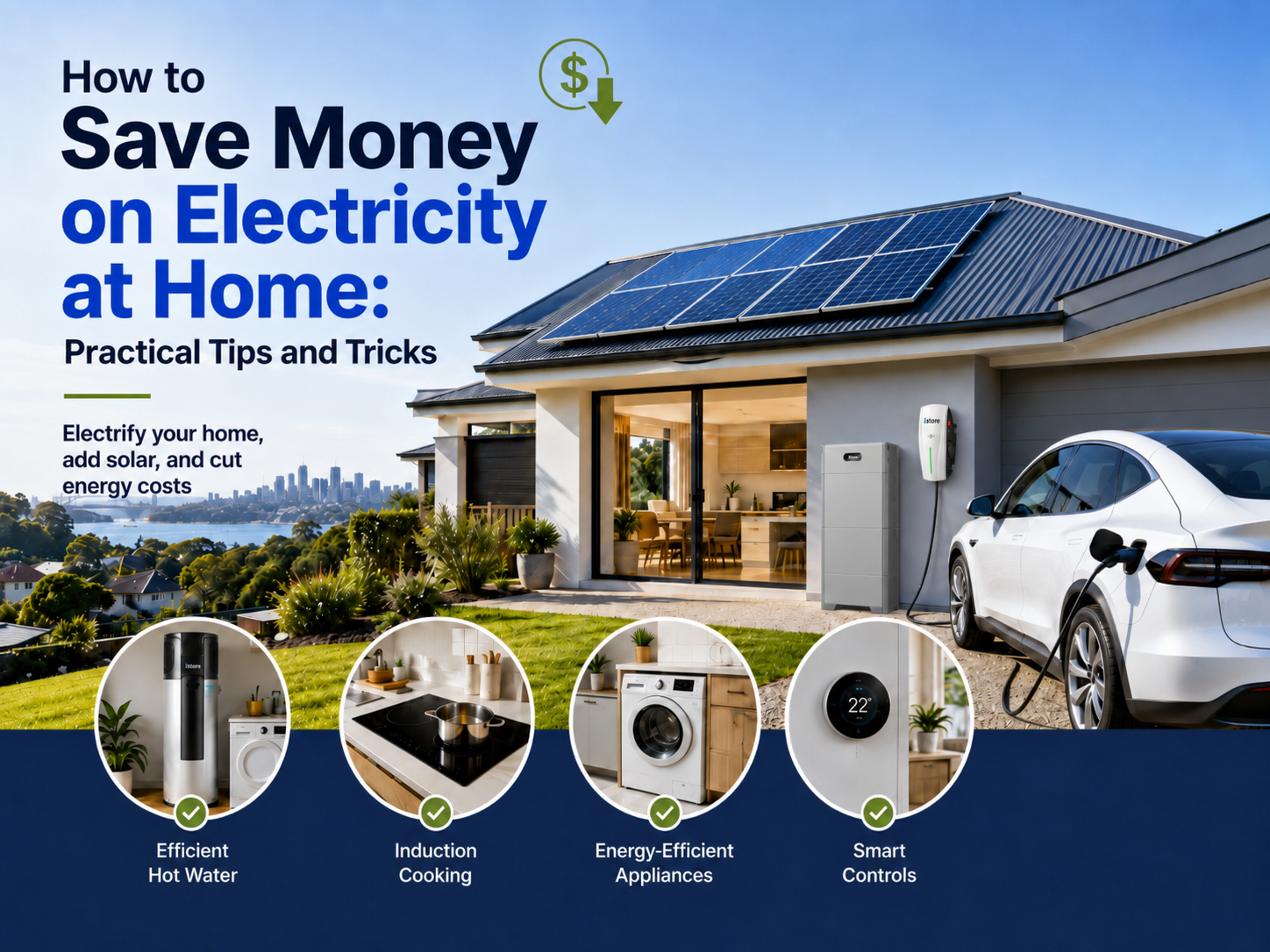
Australian households can save thousands of dollars a year across both energy and transport, by electrifying their home, switching every appliance off fossil fuels and running it on power, and pairing that with rooftop solar.
The smartest approach is to replace gas and inefficient appliances first, then generate and store your own power, and finally tap into the rebates and incentives available across Australia.
If you’re in NSW, this just got far easier: the new Home Energy Saver program offers eligible households zero-interest loans of up to $15,000 to fund upgrades like solar, batteries and efficient electric appliances, so you can spread the cost over ten years instead of paying upfront.
Find the biggest energy users first. Heating, cooling, and hot water typically use the most power in a home. Replace old gas heaters or ageing reverse-cycle units with modern, efficient reverse-cycle air conditioners (heat pumps), and switch from electric-element hot water to a heat pump hot water system that can use up to 75–85% less electricity.
Upgrade your everyday appliances. Smaller swaps add up fast. Move from gas cooktops to induction (faster, safer, more efficient), replace halogen and incandescent globes with LEDs that use far less energy, and use smart plugs to cut standby power, which can quietly account for around 10% of a typical power bill.
Pair electrification with solar and storage. Generating your own electricity is the cornerstone of an all-electric home. A correctly sized rooftop solar system covers your daytime use, while a battery stores excess solar for those expensive peak evening hours.
Use rebates and financing to lower upfront costs. Look into the Small-scale Renewable Energy Scheme (STCs), the Cheaper Home Batteries Program, and state and territory incentives for solar, batteries, heat pumps, and efficient electric upgrades. NSW households can also access the Home Energy Saver program’s interest-free loans of up to $15,000, and later in 2026, discounts of up to $4,000 for lower-income households. Eligibility and approved-product rules vary by location, so always check the current details before you commit.
To work out which upgrades will pay you back fastest, it helps to know whether you own or rent, which gas or electric appliances you currently run, and roughly how much you spend on electricity and gas each quarter. From there, you can prioritise the changes with the best return on investment.
Why Saving Electricity Matters
Saving electricity isn’t just about switching things off. It’s about using power more wisely, so your home stays comfortable without wasting energy in the background.
Every day, electricity use adds up really fast. Hot water, heating, cooling, lighting, appliances, pool equipment, devices, and EV charging can all affect how much power your home uses.
When those systems aren’t efficient, energy can disappear into the background before you even notice it!
Reducing electricity use can help your home:
- Lower day-to-day running costs
- Reduce carbon emissions
- Rely less on grid electricity
- Make better use of solar energy
- Prepare for a cleaner, more efficient energy future
Some changes don’t cost much at all, like turning devices off at the wall or running appliances during the day. Other upgrades, such as solar power, battery storage, and heat pump hot water, deliver much bigger savings over time, and they’re at the heart of home electrification: the process of moving every part of your home off fossil fuels and onto efficient electric systems powered by the sun.
Energy independence is another reason to think differently about electricity. Solar panels allow your home to generate power during the day. A battery lets you store extra solar energy for later, instead of sending it straight back to the grid.
Practical Tips to Save Electricity at Home
Switch to Energy-Efficient Appliances
Old appliances can keep running for years, but they may use a lot more electricity than newer, more efficient models. Fridges, washing machines, dryers, dishwashers, air conditioners, and hot water systems can all have a huge impact on your bill.
When it’s time to replace an appliance, check the Energy Rating Label on the new one and compare the estimated annual energy use. A cheaper appliance isn’t always cheaper if it uses more electricity year after year.
Hot water is one of the biggest areas to look at. iStore heat pumps are designed to heat water by drawing energy from the surrounding air, rather than creating heat from scratch. As a result, they can use 75–85% less electricity than traditional water heaters, making them one of the single most effective electrification upgrades you can make.
Adopt Solar Energy Solutions
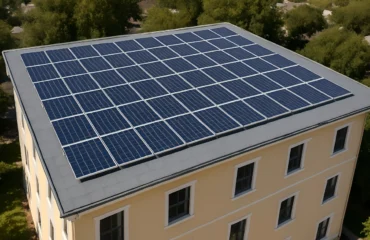
Solar panels allow your home to generate electricity from sunlight. For many Australian households, this can reduce the amount of grid electricity used during the day.
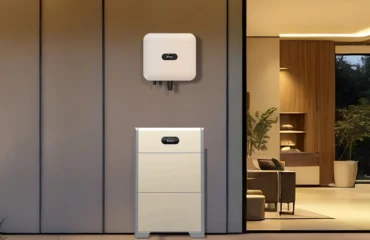
A hybrid inverter helps manage that solar energy. It converts solar power into electricity that your home can use, while also working with battery storage.
iStore’s hybrid solar inverters are designed to help your home use solar energy more effectively.
During the day, your home can use the electricity your panels generate. When your system produces more than you need, extra energy can be sent to a compatible iStore battery for later use, rather than exported for a small feed-in payment.
Switch From Gas to Efficient Electric Cooking
If you’re serious about cutting bills and electrifying your home, the kitchen is a great place to act. Replacing a gas cooktop with an induction cooktop is faster, safer, and far more energy-efficient, transferring more of the energy directly into your pots and pans rather than losing it to the air.
When your cooking runs on electricity, it can be powered by your own solar during the day, removing another fossil-fuel connection (and its supply charges) from your home.
Use LED Lighting
Lighting is one of the easiest places to start. Replacing old incandescent, halogen, or fluorescent lights with LED bulbs can quickly reduce electricity use.
LEDs use much less energy than older lighting types, and last longer, so you’ll replace them less often. Start with the lights you use most, such as kitchen lights, living room lamps, bathroom lighting, hallway lights, and outdoor lights.
One bulb might not seem like much. Across the whole home, the savings will add up!
Unplug Unused Devices
Some devices keep using electricity even when they’re not being used. TVs, game consoles, chargers, printers, computers, speakers, and microwaves can all draw standby power.
Switching devices off at the wall helps reduce this waste. Power boards with individual switches can make it easier, especially in living areas, home offices, and charging stations.
Install Smart Thermostats and Sensors
Heating and cooling can use a lot of electricity, especially during hot summers and cooler winter mornings.
Smart thermostats, timers, sensors, and temperature controls can help your systems run only when needed. Motion sensors can also reduce wasted lighting in rooms, hallways, and outdoor areas.
Try setting practical temperature ranges of 22–24 degrees year-round instead of pushing heating or cooling to extremes. Use timers so systems aren’t left running all day. If you’re still heating with gas, swapping to an efficient reverse-cycle air conditioner (heat pump) is one of the highest-impact electrification moves for both comfort and cost.
Maximise Natural Light and Ventilation
Your home may already have natural light and airflow available. The key is using them well.
A few simple habits can help:
- Open blinds during the day instead of turning lights on
- Use cross-flow ventilation when outdoor conditions are comfortable
- Close blinds, curtains, or external shading during hot afternoons
- Let winter sun warm living areas where possible
- Block harsh afternoon sun before rooms overheat in summer
These habits can reduce the need for lighting, fans, and air conditioning.
Insulate Your Home Properly
A poorly insulated home makes heating and cooling systems work harder. Warm air escapes in winter, while hot air finds its way in during summer.
Ceiling insulation, wall insulation, floor insulation, draught sealing, and better window coverings can all help your home hold its temperature far better, so your electric heating and cooling work less to keep you comfortable.
Investing in Renewable and Sustainable Energy Solutions
Solar Power Systems
Solar panels help your home generate electricity from sunlight. That can reduce the amount of grid electricity needed during the day. A hybrid inverter also plays an important role by managing the flow of energy between your solar panels, your home, and your battery. iStore’s hybrid solar inverters are built to support efficient solar energy use, with monitoring, built-in protection, and battery compatibility.
Battery Storage
Your solar panels may produce the most electricity during the day, but your household may use more power in the evening, exactly when grid prices peak. A battery stores excess solar energy so it can be used when your home needs it. iStore’s modular batteries allow you to build a storage setup around your household’s needs, starting from 5 kWh and scaling up to 30 kWh if your energy use calls for it.
Energy-Efficient Water Heating
Hot water can use a lot of electricity, especially in busy households. iStore heat pumps use air-to-energy technology to heat water efficiently, helping reduce reliance on traditional electric water heating. When paired with solar, a heat pump can be scheduled to run during the day, so your home uses more of its own renewable energy.
EV Chargers
Electric vehicles can reduce reliance on petrol, but home charging still needs to be managed carefully. An iStore EV charger can support smarter home charging with Wi-Fi app control, scheduled charging, Dynamic Load Balancing, solar optimisation, fault detection, and temperature sensors. For homes with solar, daytime EV charging can soak up excess solar power instead of drawing more from the grid later, which is where the biggest combined energy-and-transport savings come from.
Benefits of Sustainable Electricity Practices for Australian Homes
Sustainable electricity habits can do so much more than just reduce your power use. They can make your home more comfortable, more efficient, and better suited to Australia’s energy future.
Government incentives can make energy upgrades more affordable. Eligible solar panels, batteries, and heat pumps may qualify for rebates, incentives, or certificate-based discounts.
The Small-scale Renewable Energy Scheme can help reduce upfront costs for eligible renewable systems through Small-scale Technology Certificates, often called STCs. The Cheaper Home Batteries Program may also help eligible households reduce the upfront cost of installing a battery with rooftop solar.
State and territory support varies. Some programs help with solar panels, batteries, heat pumps, insulation, or efficient electric upgrades, and certain states offer interest-free loans to finance upgrades like rooftop solar, batteries, and reverse-cycle air conditioners. Always check current eligibility, location rules, approved products, and installation requirements before making a decision.
Energy-efficient upgrades can also support:
- Lower long-term running costs
- Better comfort across the seasons
- Less reliance on grid power
- Stronger appeal to future home buyers
- Better use of Australia’s sunny climate
Homes with suitable roof space, strong sun exposure, and regular daytime electricity use can really benefit from solar power. Batteries, heat pumps, and smart EV chargers can help make that energy go further.
Using these systems together can reduce pressure on the grid and support a more efficient all-electric home.
NSW spotlight
Spotlight: The NSW Home Energy Saver Program
If you live in NSW, there’s now a standout way to make electrifying your home genuinely affordable. The NSW Government recently launched a $557 million Home Energy Saver program designed to help families lower their power bills by removing the biggest barrier to upgrading: the upfront cost.
Here’s what it offers:
- Zero-interest loans of up to $15,000, available now to households with a combined taxable income of up to $210,000. You pay nothing in interest and can spread the cost over ten years rather than paying upfront. Eligible upgrades include rooftop solar, home batteries, insulation, reverse-cycle air conditioning and more.
- Discounts of up to $4,000, available later in 2026 to households with a combined annual income of up to $80,000, or eligible concession card holders. Renters can access discounts too, with their landlord’s permission.
If you’re eligible for both, the advice is to apply for the discount first, then use a loan to cover the remaining amount.
For example, if your household earns $200,000 and you want a solar and battery system for $10,000, you can borrow the full amount and pay it off interest-free over ten years, all while the system starts lowering your bills from day one.
You can find full details and apply at Energy NSW.
Why Choose iStore for Energy-Efficient Home Products?
Choosing energy-efficient products isn’t just about buying one appliance or adding one solar product. It’s about creating a home energy setup that makes sense as a whole.
iStore gives Australian households access to products that can work together across the main areas of home energy use, from solar generation and storage to hot water, pool heating, and EV charging.
That matters because energy savings often come from the way these systems interact. Your solar panels can generate clean power during the day. Your inverter can help manage that power. Your battery can store extra energy for later. Your heat pump can reduce the electricity needed for hot water. Your EV charger can help you charge more intelligently at home.
With iStore, you’re not just looking at isolated products. You’re building a more efficient home energy system that can grow with your needs.
iStore products may also be eligible for government rebates, incentives, or STC discounts, depending on your location, installer, product type, and current scheme rules. That can help make energy-efficient upgrades more affordable from the start.
There’s also support available when the technical details feel a little much. Inverters, batteries, kilowatt-hours, STCs, EV charging, load balancing, and heat pump sizing can raise plenty of questions.
iStore provides product information, installer support, and practical guidance to help you choose a setup that suits your home, your energy use, and your long-term savings goals.
iStore provides product information, installer support, and practical guidance to help households choose systems that suit their needs. The right setup can make a real difference to comfort, savings, and long-term performance.
FAQs About How Can We Save Electricity at Home
What Are the Best Ways to Save Electricity at Home?
The best ways include switching to energy-efficient appliances, using LED lighting, turning off unused devices, improving insulation, using natural light, installing solar panels, adding battery storage, and choosing efficient hot water systems like heat pumps.
What Changes Can I Make To Reduce My Electricity Bills?
Start with simple habits like switching lights off, turning devices off at the wall, washing clothes in cold water, running full loads, using timers, and reducing unnecessary heating and cooling.
For bigger savings, consider solar panels, battery storage, insulation, efficient appliances, and a heat pump hot water system.
What Is Home Electrification and How Does It Save Money?
Home electrification means replacing fossil-fuel appliances, like gas heaters, gas hot water, and gas cooktops, with efficient electric alternatives such as heat pumps, reverse-cycle air conditioners, and induction cooktops. When powered by rooftop solar, these systems can dramatically cut both your energy and transport costs, and remove gas supply charges altogether.
Can I Get an Interest-Free Loan to Electrify My Home in NSW?
Yes. The NSW Government’s Home Energy Saver program offers eligible households zero-interest loans of up to $15,000 to install energy-saving upgrades such as rooftop solar, batteries and efficient electric appliances, repayable over ten years. Households with a combined taxable income of up to $210,000 can apply now, and lower-income households may also qualify for discounts of up to $4,000 later in 2026. With iStore, you can plan solar, storage, hot water and EV charging together, potentially within that $15,000 loan, subject to your installer’s pricing and current eligibility rules.
How Can Solar Power Help Save Energy at Home?
Solar panels generate electricity from sunlight, so your home can use less grid power during the day. A hybrid inverter helps manage that energy, while a battery can store excess solar power for later use.
Are Energy-Efficient Appliances Worth the Investment?
Yes, without a doubt! Energy-efficient appliances can cost less to run over time, especially for products used every day, like fridges, washing machines, dishwashers, air conditioners, and hot water systems.
Can Smart Devices Help Reduce Energy Consumption?
Yes. Smart thermostats, timers, motion sensors, smart plugs, EV chargers, and solar monitoring tools can help reduce waste by running systems only when needed and making better use of available solar power.
Transform Your Home’s Energy Efficiency with iStore
Every wasted watt is power your home didn’t need to use. The good news? Once you know where that waste is coming from, you can start making smarter choices that actually fit the way you live.
From simple habits to bigger upgrades like solar power, inverters, battery storage, heat-pump hot water, pool heating, and EV charging, there are plenty of ways to make your home more efficient and electrified without sacrificing comfort.
iStore helps Australian households take that next step with energy-efficient products designed to work together. Generate more of your own power, store it for later, heat water more efficiently, and use electricity in a smarter way across your home.
Explore iStore’s energy-efficient products today and start saving electricity while living more sustainably. Contact us now to learn more!
Contact iStore