

What Is an EV Charger? Types, Charging Speeds, and How They Work
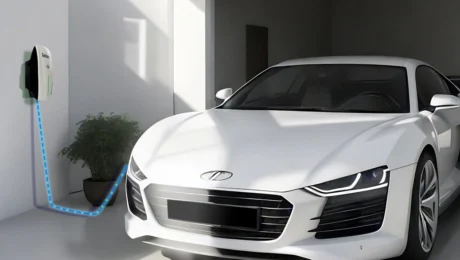
EV sales are surging year after year, with more Aussies going electric than ever before. Are you one of them? Whether you drive an electric vehicle for the savings, the sustainability, or the tech appeal, one thing’s for sure: charging matters.
From powering up at home to installing charging stations at your business, knowing your charging options can save you time, money, and a whole lot of hassle.
What is an EV charger, and what do you need to know about it? We’ll cover the different types available, how they work, and how fast they charge so you can choose the best setup.
What Is an EV Charger?
An EV charger is a device that transfers electricity into an electric vehicle’s battery, allowing it to recharge and power the car’s motor.
How Does an EV Charger Work? EV Charging Basics
- The charger draws electricity from your home or business’ electricity source, be it the grid or solar panels.
- Most homes and businesses supply AC (alternating current), which needs to be converted to DC (direct current) because EV batteries only use DC power. An inverter steps in to do the job, either inside the charger (for DC fast chargers) or inside the car using its onboard inverter.
- The converted electricity is then sent through the charger and into your EV’s battery.
Types of EV Chargers
Level 1 Chargers
Level 1 chargers are the most basic type and come standard with most electric vehicles. They plug into a regular 240-volt (V) household power outlet, so there’s no special installation needed.
They’re the slowest charging option, but provide enough for overnight charging if you drive short distances.
Level 1 chargers can be a practical option for plug-in hybrid vehicles. Since hybrids have smaller batteries than full EVs, they don’t take as long to recharge, making a standard outlet more than capable of topping them up.
Level 2 Chargers
Level 2 chargers are faster and more powerful than Level 1 chargers. They require a dedicated 230–240V circuit, similar to what large appliances like ovens or air conditioners use, and usually need to be installed by a professional.
These chargers are compatible with most EVs and plug-in hybrids and are ideal for daily home use or for businesses looking to offer EV charging to staff or customers.
EV charging standards in Australia are shifting toward smart chargers as the new normal. Many Level 2 chargers can monitor energy usage, allow you to schedule charging during off-peak times when electricity is cheaper, and even integrate with solar systems to maximise efficiency. All this helps you lower costs, reduce grid reliance, and keep your EV ready when you need it.
Fast Chargers (DCFC)
DC fast chargers (DCFC) are the quickest way to charge an EV. Unlike Level 1 and Level 2 chargers, which supply AC power, DC fast chargers deliver electricity in DC form directly to the battery, skipping the vehicle’s onboard inverter.
They require a high-voltage, three-phase power supply and are installed in commercial or public locations like shopping centres, service stations, or highway rest stops. They service commercial vehicles making long trips or fleet vehicles needing quick turnarounds.
Understanding EV Charging Speeds
EV charging speed is measured in kilowatts (kW), which refers to how quickly electricity is transferred to your vehicle’s battery.
Charging speed depends on two main factors: an EV’s maximum charging capacity and the size of its battery.
Every EV has a built-in limit on how much power it can accept at once. So even if you plug into a high-powered charger, your car will only draw what it’s designed to handle.
For example, if your EV has a 7 kW onboard charger, it won’t charge any faster than 7 kW, even if you’re using a 22 kW charger. On the flip side, if your EV can accept 11 kW but you’re using a 7 kW charger, it will charge at the lower 7 kW speed.
EV batteries are measured in kilowatt-hours (kWh), which indicates how much energy they can store. A larger battery takes longer to fully charge than a smaller one.
Charging time is a mix of how fast power flows (kW) and how much energy your battery can hold (kWh). Matching your charger to your vehicle’s capabilities helps you get the best results.
Comparing EV Charging Speeds
| Charger Type | Power Output | Typical Range Added | Typical Charging Time | Power Source | Best For |
| Level 1 | Approx. 2.4 kW | 10–20 km per hour | 14–24+ hours (full charge) | Standard 240V outlet | Plug-in hybrids, light daily EV use. Slowest option; ideal for overnight top-ups |
| Level 2 | 7–22 kW | 30–130 km per hour | 4–10 hours (full charge) | Dedicated 240V circuit | Daily home charging, businesses with EV bays. Faster, more efficient charging, often with smart features |
| DC Fast Charger (DCFC) | 50–350+ kW | 150–300+ km in 15–30 mins | 20–60 mins (up to 80% charge) | High-voltage 3-phase power | Highway stops, fleets, fast turnaround needs. Not suitable for most homes |
Benefits of Installing an EV Charger at Your Home or Business
- Convenience: Charge your EV anytime without needing to visit public charging stations or wait in queues.
- Cost Savings: Charging at home or work, especially during off-peak hours, can be cheaper than using public chargers or buying fuel.
- Energy Efficiency: Pairing with solar panels or smart charging helps you use cleaner, lower-cost energy while avoiding unnecessary power use. Smart chargers can monitor energy use, schedule charging during cheaper off-peak times, and manage how power is delivered if you have more than one EV or a variable electricity plan.
- Increase in Home Value: A dedicated EV charger can make your property more appealing to future buyers or tenants.
- Attracting Customers or Tenants: For businesses and rentals, offering EV charging can help draw in eco-conscious drivers.
- Tax and Incentive Opportunities: Depending on your location, rebates or tax incentives may be available to offset installation costs.
Why Choose iStore for Your EV Charging Solutions?
For EV charging at your home or business, you want a setup that’s simple, reliable, and cost-effective. As an Australian-owned, family-run company, we truly understand what you need.
Our EV chargers work with your lifestyle, not the other way around. They give you fast, efficient charging with the option to connect to hybrid solar inverters and solar batteries for even bigger electricity savings and an even smaller impact on the environment.
With iStore, you’ll enjoy local support, expert advice, and quality products that go the distance. Charge with confidence, knowing you’re getting a smarter, more convenient way to power your EV.
We supply two EV charger models to suit different charging needs.
- 7.4kW 230V AC 1-Phase EV Charger: This model offers overnight charging using a standard single-phase power supply. It’s ideal for everyday EV use and suits typical Australian household energy setups.
- 22kW 400V AC 3-Phase EV Charger: Designed for larger homes or businesses with a 3-phase power supply, this model delivers much faster charging to larger EVs, multiple vehicles, or commercial vehicles.
FAQs
What Does an EV Charger Do?
An EV charger supplies electricity to an electric vehicle’s battery, allowing it to recharge. It connects to a power source and controls how quickly and safely energy is delivered to the car.
Can I Have an EV Charger at Home?
Most homes can support an EV charger. Level 1 chargers plug into a standard outlet, while Level 2 chargers may need a licensed electrician to install a dedicated circuit.
What Are the Different Types of EV Chargers?
There are three main types of EV charger: Level 1 (slow, plugs into a standard outlet), Level 2 (faster, requires a dedicated circuit), and DC fast chargers (very fast, typically for commercial use).
How Much Does It Cost to Install an EV Charger in Australia?
Most EVs come with a free Level 1 charger. For faster charging, you’ll need a dedicated Level 2 charger.
Level 2 EV chargers can cost between $500 and $2,000. Including labour and materials, installation can cost $700 to $1,300. So overall, you could pay $1,200–$3,300.
Installing a DC fast charger (DCFC) at a business can cost between $50,000 and $160,000+. This price includes around $40,000 to $100,000 for the charger itself and $10,000 to $60,000+ for installation, electrical upgrades, and site preparation.
Power Your EV with Smart Charging Solutions from iStore
If you were wondering, “What is an EV charger?”, we’re sure you’re not anymore!
But if you have questions about how to choose the right EV charger for your home or business, we’re more than happy to help.
Browse our range of the best home EV chargers in Australia today, then get in touch by calling 1300 515 640 or filling out this online form.
Convenient and efficient EV charging awaits!
- Published in General
How Do Solar Batteries Work?

As more households look to cut their energy costs and reduce their reliance on the grid, solar batteries are stepping into the spotlight.
For solar installers, they’re no longer just an optional add-on; they’re becoming a key part of the conversation. And for customers, they’re a way to take control of how and when they use solar power.
Whether you’re an installer explaining battery options or a homeowner weighing up your solar investment, it’s important to understand the answer to the question: “How do solar batteries work?”
Then, you’ll be in a better position to compare products, understand their benefits, and make informed decisions that suit each home’s energy needs and budget.
What Are Solar Batteries, and How Do They Work?
Solar batteries are energy storage systems designed to hold excess electricity generated by solar panels. Instead of sending unused solar power back to the grid, these batteries store it for later use, like at night, during cloudy days, or when there’s a blackout.
How do solar batteries work? Here’s the process.
- Power Generation: During the day, solar panels absorb sunlight and generate direct current (DC) electricity.
- Power Conversion: A hybrid inverter converts that DC electricity into alternating current (AC) power for use in the home. At the same time, it directs any extra energy into the solar battery for storage.
- Power When Needed: When the sun goes down or a home’s energy use spikes, the house automatically draws power from the battery first, reducing the need to buy electricity from the grid.
Solar Inverters: A Solar System’s Traffic Controller
A solar inverter plays a crucial behind-the-scenes role in any solar and battery setup. It manages the flow of electricity between the solar panels, the battery, and the home’s appliances.
First, it converts the electricity coming from the panels (which is in DC form) into AC electricity, which is what most appliances run on.
If there’s more solar energy than the household needs at that moment, the inverter sends the excess power to the battery for storage. Later, when energy is needed and the sun is not shining, the inverter sends stored power from the battery to the home.
A solar inverter constantly switches between sources, making decisions in real-time about where electricity should go. Without it, a solar battery system wouldn’t be able to function properly.
Types of Solar Batteries and How They Function
| Battery Type | What It Is | How It Works | Pros | Cons |
| Lithium-Ion | The most common battery type for home solar systems | Uses lithium compounds to store and release energy through chemical reactions | High efficiency, long lifespan, compact size, fast charging | Higher upfront cost |
| Lithium Iron Phosphate (LiFePO₄) | A subtype of lithium-ion, known for thermal stability and safety | Similar to standard lithium-ion but uses iron phosphate for better stability and longevity | Safer, longer cycle life, resistant to overheating. The preferred choice for most households. Used at iStore | Slightly bulkier than other lithium batteries due to lower energy density. Only a problem if space is limited or a more compact setup is preferred |
| Lead-Acid (Flooded and AGM) | Traditional battery type, often used in off-grid systems | Stores energy using lead plates and a liquid or gel electrolyte | Lower upfront cost, widely available, simple tech | Shorter lifespan, lower efficiency, bulky, requires ventilation or maintenance (flooded) |
| Flow Batteries | Emerging tech, mostly used in commercial settings for now | Stores energy in external tanks using liquid electrolytes that flow through a cell | Very long lifespan, scalable capacity, easy to recycle | Expensive, large physical footprint, not yet widely used in homes |
| Saltwater | Newer, eco-friendly battery option | Stores energy using saltwater electrolytes rather than heavy metals | Non-toxic, recyclable, no risk of fire or overheating | Larger size, lower availability, lower energy density |
Key Benefits of Solar Batteries for Homeowners
If you’re an installer trying to convince your clients they need a solar battery, or you’re a homeowner investigating whether it’s worth getting one, here are the benefits to consider.
- Energy Independence: Reduces reliance on the grid by storing excess solar power for later use, especially during peak times when electricity prices are higher or when outages occur.
- Lower Electricity Bills: Helps cut power costs by using stored solar energy instead of buying electricity from the grid.
- Backup Power: Keeps essential appliances running during blackouts or grid failures, for peace of mind.
- Environmental Impact: Makes better use of clean, renewable energy and reduces overall carbon footprint.
- Scalability: Allows homeowners to start small and expand their battery storage as their energy needs grow or budgets allow, e.g. installing more solar panels or buying an electric vehicle.
The Solar Battery Charging and Discharging Process
During the day, when solar panels generate more electricity than the home needs, the excess energy is sent to the battery. This is known as charging. The battery stores this energy instead of it being sent back to the grid.
At night, on cloudy days, or during power outages, the battery discharges, supplying that stored energy to keep appliances and lights running. The home automatically draws power from the battery first before turning to the grid.
An important factor in this process is the Depth of Discharge (DoD), which refers to the percentage of the battery’s stored energy that can be used before it needs to be recharged. For example, a battery with a 90% DoD can safely use up to 90% of its capacity each cycle.
A higher DoD means more of the battery’s stored energy can be used each day. However, discharging too much too often can reduce the battery’s lifespan. It’s about finding the right balance between daily use and long-term durability.
Factors That Affect Solar Battery Performance
- Battery Type: Different battery chemistries, such as lithium-ion, lithium iron phosphate, or lead-acid, offer varying levels of efficiency, lifespan, and storage capacity. At iStore, we use lithium iron phosphate (LiFePO₄) batteries, as they tend to last the longest, with more charge cycles than standard lithium-ion or lead-acid batteries.
- Temperature: Extreme heat or cold can impact battery performance and longevity, especially if the system isn’t installed in a temperature-controlled space.
- Usage Patterns: Frequent deep discharges or irregular charging can wear out the battery more quickly, while consistent, moderate use supports a longer lifespan.
- System Integration: Performance improves when batteries are paired with compatible inverters, proper wiring, and smart monitoring tools (like the iStore WLAN dongle) that manage energy flow efficiently.
Why Choose iStore Solar Batteries?
With over 500 solar battery models from 86 manufacturers currently approved for installation in Australia by the Clean Energy Council (CEC), the market offers a wide range of choices.
What makes iStore solar batteries a trusted option for homes across the country?
- Durability in Australian Conditions: Built to handle Australia’s harsh climate, from scorching summers to cool winters, without compromising performance. Our batteries can operate reliably in temperatures from -20°C to 55°C and have an IP rating of 66 for protection against dust, dirt, and heavy rain.
- Safety Features: Four layers of built-in protections against overheating, overcharging, and short circuits.
- Modular Design: Easily expandable. Each iStore battery is a stackable module weighing 50 kg, with a capacity of 5 kWh (kilowatt-hours). You can connect up to six modules to increase storage to a maximum capacity of 30 kWh.
- More Usable Energy: Delivers 100% Depth of Discharge (DoD). The full capacity of the battery can be utilised without compromising its lifespan, resulting in greater value from every charge.
- User-Friendly Monitoring: Comes with an intuitive app that displays real-time performance, battery levels, and energy usage at a glance.
- Strong Warranty: Our batteries come with a 10-year performance warranty, guaranteeing reliable storage and consistent performance for years to come. This warranty shows that we stand behind our technology and know it can go the distance in Aussie conditions.
FAQs
How Do Batteries Work With Solar Panels?
Solar panels generate electricity during the day and power the home first. If there’s extra energy, the system sends it to the battery for storage. When the sun goes down or energy demand rises, the battery releases the stored power to keep appliances and lights running.
A hybrid inverter actively manages the flow between the panels, battery, and home to make sure everything works smoothly.
How Do Solar Batteries Work in Australia?
Solar batteries store excess solar energy generated by rooftop solar panels during Australia’s renowned sunny days and supply that power when the sun isn’t shining.
Our long sunny days, extreme summer heat, and occasional blackouts from storms make solar batteries particularly useful here.
How Long Will a 10 kW Battery Last?
A 10 kW battery can typically power an average home for 8–12 hours, depending on energy usage. It may last longer if used only for essential appliances, and shorter if multiple high-energy appliances are running simultaneously.
What Happens to Solar Power When Batteries Are Full?
When a solar battery is fully charged, any excess solar power is sent back to the grid or, in some systems, redirected to power non-essential appliances. This process prevents energy from going to waste while keeping the battery protected from overcharging.
Do Solar Batteries Recharge Themselves?
No, solar batteries don’t recharge themselves. They rely on excess electricity generated by solar panels during the day to charge. Without solar input or grid charging (if supported), the battery won’t refill.
Maximise Your Energy Independence with iStore Solar Batteries
How do solar batteries work?
Think of them as a home’s personal power bank, quietly saving up the extra solar energy collected during the day so it’s ready to use when the sun isn’t out. For powering appliances after dark, keeping the lights on during a blackout, or cutting down energy bills, a solar battery gives solar power a second life.
In a world where energy costs keep rising and sustainability matters more than ever, solar batteries are becoming an integral part of building smarter, more efficient homes.
That’s why iStore is committed to delivering solar battery solutions built for Australian homes. Our systems are durable enough to handle local conditions, efficient enough to make a real difference, and packed with safety features for added confidence.
Browse our solar battery and solar inverter range today, then get in touch for a consultation or quote by calling 1300 515 640 or filling out this online form.
- Published in General
Installing a Home EV Charger – Costs, Process, and Requirements
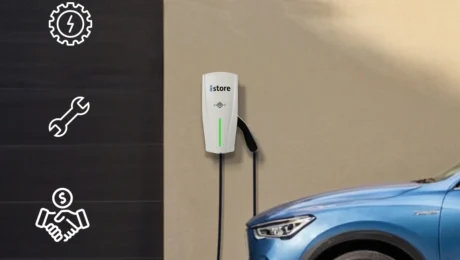
More Aussie drivers are ditching the detours to public charging stations and installing EV chargers at home for convenience, cost savings, and more eco-friendly driving.
After choosing the best EV charger for your home and vehicle, the next logical question is, “How do you install an EV charger at home?” Can you DIY, or do you need professional help?
We’re here to explain what’s involved in installing an EV charger at home, from how much it costs to the installation process, whether DIY or professional.
Why Install an EV Charger at Home?
- Greater Convenience: Charge while you’re at home during the day or sleeping at night. No need to drive out of your way or queue at public stations.
- Lower Charging Costs: Home charging is usually cheaper than public stations, especially if you set your charger to run during off-peak times. Energy providers offer discounted rates when electricity demand is lower, typically late at night or early in the morning.
- Better Energy Efficiency: Pairing your charger with solar panels, an inverter, and a battery lets you use clean, renewable energy to power your EV, cutting carbon emissions and energy bills.
- Future Flexibility: Having a charger at home means you’re ready to upgrade to a newer EV model, switch brands, or add a second EV. Most home chargers support a wide range of EVs, so you won’t need to reinstall new equipment whenever you change cars.
- Higher Property Value: Homes with EV chargers are becoming more desirable as more people switch to using EVs.
Types of Home EV Chargers
Level 1 Chargers
Your EV should come with a free Level 1 charger that plugs into a standard residential 230–240V power outlet.
With a power output of around 2.4 kW, they’re the slowest EV charger, taking 12–20+ hours to fully charge most EVs. You can expect to add 10–15 km of range to your EV per hour of charging.
Because of their slower charging speed, Level 1 chargers are a good option if you don’t drive much or only need to top up occasionally.
Most Level 1 chargers don’t offer smart features like app control or charging schedules. They also aren’t usually compatible with solar systems; instead, they draw power from the electricity grid.
Level 2 Chargers
Level 2 EV chargers use a dedicated 230–240V circuit with higher amperage to deliver more power to your car in less time than a standard power point. An electrician will wire the charger directly into your switchboard.
Most homes run on single-phase electricity, which supports Level 2 chargers with an output of around 7.2 kW. These chargers can add 30–50 km of range per hour and fully charge an EV in 4–10 hours. Larger or rural properties with three-phase power can support chargers up to 22 kW, which add up to 120 km of range per hour and deliver a full charge in just 1.5–4 hours.
You can buy a Level 2 charger from your car dealer, EV charger retailers, or online stores. They’re ideal for daily use, longer commutes, and multi-EV households.
Smart Chargers
Many Level 2 chargers include smart features such as
- App Control: Start or stop EV charging, check charging status, and get notifications through a mobile app.
- Charging Scheduling: Set the charger to run at specific times, like during off-peak hours when electricity is cheaper.
- Energy Monitoring: Track how much energy your EV uses and view your charging history to give you better insight into running costs and power usage.
- Load Management: Automatically balances the charger’s power use with the rest of your household to prevent overloading your electrical system.
- Solar Integration: Use excess solar power to charge your EV instead of drawing from the grid. Some chargers can prioritise solar usage or mix solar and grid power for maximum efficiency.
Key Requirements for Installing an EV Charger at Home
Before you install an EV charger at home, there are some important things to consider.
The power your home has affects what kind of charger you can install and how quickly your EV can charge.
Most homes in Australia use single-phase power, which can handle a basic Level 1 charger or a Level 2 charger with an output of around 7.2 kW for faster, overnight charging. Larger homes or rural properties with three-phase power can support faster chargers up to 22 kW.
If you choose a Level 2 charger, it will need a dedicated circuit so it doesn’t compete with other appliances in your home. An electrician will assess your switchboard to make sure it has enough capacity and upgrade it if needed.
Lastly, think about where you’ll install the charger. It should be near where you park your EV and within reach of the charging cable. The spot should also be easy to access, protected from the weather, and safe from potential damage. Wall-mounted units in garages or under carports are common, but outdoor setups can work too, as long as the charger is weatherproof and professionally installed.
Step-by-Step Guide to Installing an EV Charger at Home
Level 1 Charger
Installing a Level 1 EV charger is a DIY job.
- Your EV should come with a Level 1 charger. Take it out of the boot or storage compartment.
- Find a power point close to where you park your EV. A garage or undercover carport works best.
- Plug the charger into the power point. No special tools or installation are needed.
- To keep things tidy, you can mount the charger on a wall using a bracket or hook. If a bracket/hook isn’t included, you can buy one from Bunnings or an online EV accessories store.
- Plug the charger into your EV. Check your EV’s dashboard or app to track charging progress.
Level 2 Charger
Installing a Level 2 charger is more difficult and must be done by a licensed electrician. High-voltage wiring and compliance with electrical safety regulations are involved.
Your electrician will
- Assess the switchboard and wiring. They’ll inspect your switchboard to confirm it can handle the charger’s load, checking your wiring, power type (single or three-phase), and space for a new circuit breaker. Your switchboard may need an upgrade.
- Run a dedicated circuit. Because EV chargers need their own circuit, the electrician will install new cabling from your switchboard directly to the charger’s location. They’ll plan a safe, efficient cable path that avoids other wiring or plumbing.
- Install a safety switch. It is a legal requirement to install an RCD (residual current device). This safety switch reduces the risk of electric shock and faults.
- Mount the charger. Once the wiring is complete, the electrician will mount the charger on a sturdy wall or surface using a bracket or mounting kit. They’ll discuss the location with you: somewhere protected from the elements, easy to access, and near where you park your EV.
- Connect the charger and test the system. The electrician will wire the charger into your power supply, test that everything works correctly, and check that the installation meets Australian standards (AS/NZS 3000). They’ll provide a Certificate of Compliance to confirm they did the job safely and legally.
- Set up any smart features. If your charger has an app or smart control system, the electrician can connect it to your Wi-Fi and guide you through features like remote charging, scheduling, and monitoring.
- Configure solar charging (if applicable). If your home has solar panels, the electrician can link the charger to your solar system so it prioritises solar energy when available. If you also have a solar battery, they can configure your system to store daytime solar energy and use it for overnight charging.
DIY vs. Professional Installation
While installing a Level 2 charger yourself might be tempting to save money, it’s not a safe or legal option.
These chargers draw much more power than a standard appliance and must be wired directly into your switchboard. Handling high-voltage electrical work without a licence can lead to safety risks, fire hazards, and insurance issues.
DIY installation doesn’t comply with Australian electrical standards, which could void your EV charger’s warranty or create problems when selling your home.
Hire a licensed electrician to get the job done safely and correctly. They’ll make sure your switchboard can handle the charger, install the correct safety switches, and provide a Certificate of Compliance to protect your warranty and give you peace of mind.
Costs of Installing a Home EV Charger
How much does it cost to install an EV charger at home?
The answer varies depending on the charger, installation complexity, electrical upgrades, and solar integration.
As discussed, a Level 2 EV charger requires professional installation. Including labour and materials, basic installation can cost $700–$1,300. The chargers themselves can range from $500 to $2,000. So you can expect to pay a total of $1,200–$3,300.
If your switchboard is older or undersized, you could pay $900–$1,800 for a single-phase upgrade or $1,500–$3,500 for a three-phase upgrade.
If you want to integrate the charger with your solar system, there may be additional costs for solar-compatible chargers, components, and system configuration. Your electrician may charge a flat rate or by the hour for solar integration. The hourly rate could range from $80 to $130, depending on location and job complexity.
EV Charger Incentives in Australia
Some state and territory governments offer incentives for installing an EV charger at home.
In the Northern Territory, the EV Charger Grants Scheme offers $1,000 to EV owners for purchasing and installing a home charger. Over in the ACT, eligible homeowners can get a zero-interest $2,000–$15,000 loan to buy an EV charger.
There are also federal and state incentives for installing solar batteries, which can make solar EV charging more affordable.
Starting July 1, 2025, the federal Cheaper Home Batteries Program offers up to a 30% reduction in the cost of home solar batteries.
Various states provide additional incentives. For example, New South Wales offers up to $2,400 off the installation cost of a solar battery for homes with existing solar.
Why Choose iStore for Your Home EV Charger?
iStore EV chargers have everything you’re looking for in a home charger.
- High Quality: Durable, weather-resistant, and safe, with built-in protection features.
- Different Charging Options: We have a 7.4 kW 230V AC 1-phase model and a 22 kW 400V AC 3-phase model to suit various homes and charging needs.
- Competitive Pricing: Affordable without compromising on performance or safety.
- Smart Charging Technology: You can schedule charging times during off-peak electricity hours, monitor charging sessions, and integrate with your solar system from your smartphone.
- Integration With Solar Energy Systems: If you have an iStore hybrid inverter and solar battery, your iStore EV charger will seamlessly work with them to maximise energy efficiency and electricity savings.
- Local Customer Support: We’re committed to helping you with installation and maintenance by linking you up with reputable local installers.
FAQs
How Much Does It Cost to Install an EV Charger at Home?
Most EVs come with a free Level 1 charger you can install yourself.
For faster charging, you’ll need a dedicated Level 2 EV charger. These can cost $500–$2,000, with installation costing $700–$1,300.
Can I Install an EV Charger Myself?
You can install a Level 1 charger yourself by plugging it into a standard power point.
A licensed electrician must install a Level 2 charger because it requires a dedicated high-power circuit, wiring into your switchboard, and compliance with Australian electrical safety standards.
What Type of EV Charger Is Best for Home Use?
The best home EV charger is one that suits your driving habits, home power supply, and budget. Many Australian EV owners choose a Level 2 charger for faster, more convenient charging.
Can I Install a Fast EV Charger at Home?
True fast EV chargers, like those at public charging stations, are called DC chargers and aren’t suitable for homes due to their high power needs and infrastructure requirements.
For homes, the fastest charging option is a Level 2 EV charger.
How Long Does It Take to Install a Home EV Charger?
A straightforward Level 2 charger installation usually takes 2–4 hours. In that time, the installer will mount the unit, run the dedicated circuit, wire it into your switchboard, and test everything.
If your home needs a switchboard upgrade, an extensive cable run, or has a three-phase electrical setup, the job can stretch to a full day or even a few days.
Simplify Your EV Charging with iStore
If you want to charge your EV when it suits you, for less cash, and in a way that’s better for the environment, install an EV charger at home.
iStore EV chargers are affordable, high-quality, and long-lasting. And we can hook you up with expert installers in your area.
Contact us today for advice and a quote by calling 1300 515 640 or filling out this online form.
- Published in General
EV Wall Charger Buying Guide – How to Choose the Right One
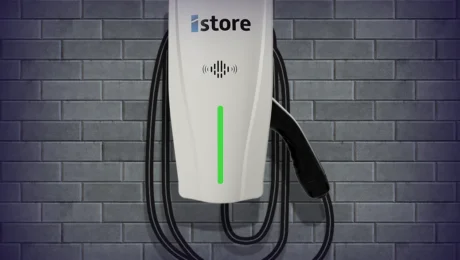
So, you’ve made the switch to an electric vehicle (EV), or you’re seriously thinking about it. Excellent! EVs are quiet, clean, and cheaper to run: no petrol stops, no oil changes, just smooth rides and lower bills.
But driving electric is only half the story. The real game-changer? Charging at home. No more fighting for a spot at the local charging station or waiting around while your battery crawls from 20% to “almost there.” With an EV wall charger, your garage becomes your personal recharging station: fast, smart, and convenient.
How can you choose the right EV wall charger for your car, home, and lifestyle?
This iStore guide will tell you everything you need to know!
What Is an EV Wall Charger and How Does It Work?
An EV wall charger is a device that lets you charge your EV from home using your household power supply. You can mount it on a wall in your garage, carport, or driveway.
All EVs come with a basic charger, often called a Level 1 charger. This charger plugs into a standard power point, like your toaster or phone charger would. But it’s quite slow, taking 12–20 hours, or even longer, to fully recharge your EV’s battery.
Alternatively, Level 2 chargers are dedicated wall units that use a higher voltage to deliver power much faster. Depending on your home’s electrical setup, a Level 2 charger can fully charge your EV in 4–10 hours.
Most EV wall chargers connect directly to your home’s switchboard, drawing power through a dedicated circuit.
Many EV wall chargers, like iStore’s are part of a solar energy product lineup, letting you charge your car using free, clean energy from the sun. Some systems can even prioritise solar energy first, so you’re not drawing from expensive grid electricity unless you need to.
How to Choose an EV Wall Charger: Key Factors to Consider
Charging Speed
Charging speed refers to how fast your EV wall charger can add power to your EV’s battery. The higher the charging speed, the less time you need to plug in your EV.
Charging speed is measured in kilowatts (kW). A higher kW rating means faster charging. For example, a 7.2 kW Level 2 charger can typically add around 30 to 50 km of range per hour, depending on your vehicle. Compare that to a basic 2.4 kW Level 1 charger, which only adds 10 to 15 km of range per hour.
You must check how much power your EV can accept. Some vehicles cap out below 7.2 kW, so going for a higher-powered charger won’t necessarily speed things up.
Compatibility
You must also check how much power your home can handle. Most single-phase homes in Australia can support chargers up to 7.2 kW. Larger properties with a three-phase power supply can support chargers up to 22 kW. iStore’s EV chargers are available in either 11kW or 22kW so you can select the one most suitable for your home.
Choose a charger that delivers the maximum speed your home and EV can support, without overpaying for power you can’t use.
Then, there’s the plug. Not all EVs use the same plug. The EV wall charger you choose must match your vehicle’s connector. Most newer EVs use a Type 2 connector, which has become the standard. However, some older models or imports might use a Type 1 connector instead.
Check your EV manual or speak to your dealer before buying. Many chargers list which vehicle brands or connector types they support, so it’s usually easy to confirm.
Smart Features
Some EV wall chargers like iStores, come with smart features. One of the most useful is app control. With a connected app, you can start or stop charging from your phone, check how much charge your car has, or get alerts when it’s done.
Energy monitoring lets you see exactly how much electricity your EV uses, which is handy for tracking energy usage costs and managing your home’s overall energy usage.
Scheduling is another great feature. You can set your charger to only run during off-peak hours when electricity is cheaper.
Some chargers are demand response ready, meaning they can automatically adjust charging during peak times if your electricity provider offers incentives. It’s a way to help balance the grid and lower your electricity bills.
Many chargers can also connect to smart home systems like Google Home or Amazon Alexa, so you can manage charging with voice commands or automate it as part of your home energy routine.
If you like convenience, control, and saving money, it’s worth looking for an EV wall charger with these smart features.
Durability and Safety
Your EV wall charger must be able to handle Aussie weather if you’re installing it outdoors. Choose a weatherproof model that resists rain, heat, and dust. Most chargers including iStore’s list an IP rating (like IP65), which shows how well the unit keeps out water and dirt. A higher number means better protection.
Safety is also important. A good EV charger should have built-in protections against overheating, short circuits, and power surges. These features help prevent damage to your car and home, especially during storms or power outages.
Check for certifications that show the charger has been tested to meet Australian safety standards. Look for things like RCM (Regulatory Compliance Mark) or other recognised approvals so you know you’re buying a reliable product.
Aesthetics
While performance matters most, the look of your EV wall charger is not to be overlooked, especially if it’s mounted in a visible spot like your driveway or garage wall.
Some chargers have a sleek, modern design that will blend in with your home’s exterior, while others might stand out more than you’d like. Many brands also offer compact units with clean lines and neutral colours that won’t clash with your space.
If visual appeal matters to you, take a moment to check the size, shape, and finish of the charger before buying.
Benefits of Installing an EV Wall Charger at Home
Convenience
Having a wall charger at home means you can plug in your EV when you get home and wake up to a full battery.
No trips to a public charger, no waiting in line, no wasting time. Just easy, reliable charging on your schedule.
Cost Savings
Charging your EV at home is often much cheaper than using public charging stations. Public chargers usually charge higher rates per kilowatt-hour, and some add session or connection fees.
With a home EV wall charger, you can also take advantage of off-peak electricity rates, which are lower prices charged by your energy provider when demand is low (late at night or early in the morning). Many chargers let you schedule charging to start during these hours automatically, so you save money without lifting a finger.
Energy Efficiency
Pairing your EV wall charger with solar panels is incredibly energy efficient. Instead of drawing electricity from the grid, your charger can use the free energy your solar system produces during the day. If you also have a solar battery, you can store any extra generated solar energy and use it to charge your EV at night, maximising your solar savings.
This setup means you rely less on grid electricity, especially during peak times when prices are higher. You can charge your EV for next to nothing!
Using solar energy to charge your EV also helps reduce your carbon footprint with clean, renewable power instead of coal or gas-generated energy.
Resale Value
An EV wall charger can make your home more appealing to future buyers as more people switch to electric vehicles. For EV owners, having a charger already installed is a big plus, saving them the cost and hassle of installing one.
EV Charger Comparison
| Feature | Level 1 Charger | Level 2 Charger |
|---|---|---|
| Power Output (kW) | Approx. 2.4 kW | 3.6–7.2 kW (single-phase) / up to 22 kW (3-phase) |
| Voltage | 230–240 V (standard outlet) | 230–240 V (dedicated circuit) |
| Home Compatibility | Single-phase | Single-phase and 3-phase |
| Charging Speed | Slow | Fast |
| Charging Time | 12–20+ hours (full charge) | 4–10 hours (single-phase) / 1.5–4 hours (3-phase) |
| Range Added per Hour | 10–15 km | 30–50 km (single-phase) / up to 120 km (3-phase) |
| Installation | Simple; plugs into a standard power point. Comes with a wall bracket or hook for easy mounting | A licensed electrician must safely connect the charger to the switchboard and meet Australian electrical standards |
| Smart Features | None | Often includes app control, timers, and usage data |
| Best For | Occasional or low-mileage users | Daily charging, faster top-ups, solar integration |
| Solar Compatibility | Limited | Can integrate with solar systems |
| Cost | Typically included for free with an EV purchase | Higher (equipment + installation) |
EV Charger Incentives and Rebates Available in Australia
Some Australian state and territory governments offer incentives for installing residential EV chargers.
In the Australian Capital Territory, eligible homeowners can get a loan from $2,000 to $15,000 to buy energy-efficient products, including electric vehicle charging infrastructure. This is a zero-interest loan, and homeowners have up to 10 years to repay it.
Over in the Northern Territory, the EV Charger Grants Scheme offers a $1,000 grant to EV owners for purchasing and installing a home charger.
Federal and state-based incentives for installing solar batteries can help make solar EV charging more accessible and affordable for Australians.
Starting July 1, 2025, the federal Cheaper Home Batteries Program offers up to a 30% reduction in the cost of home solar batteries, potentially saving households up to $18,600 or 30% off the cost of a home battery.
Various states provide additional incentives. For example, New South Wales offers up to $2,400 off the installation cost of a solar battery for homes and businesses with existing solar.
How Much Does an EV Wall Charger Cost?
Most EVs come with a basic Level 1 charger. But if you want faster charging, you’ll need a dedicated Level 2 charger.
Level 2 EV wall chargers can range from $500 to $3,000. Installation, including labour and materials (wiring, circuit breakers), can cost between $700 and $1,500. So you can usually expect to pay $1,500-4500 for a Level 2 charger and installation.
How to Install an EV Wall Charger
Installing a Level 1 EV wall charger doesn’t require professional help. Simply plug the charger straight into a standard household power point. You can then mount the charger on a wall using a basic wall bracket or cable hook, which is often included or easy to buy separately.
Installing a Level 2 charger is more involved and must be done by a licensed electrician.
They will
- Inspect your switchboard and wiring. The electrician will check whether your switchboard can handle the extra load of an EV wall charger. They’ll look at your existing circuit breakers, wiring condition, and whether you have single-phase or three-phase power. Your switchboard may need an upgrade or a new circuit breaker installed.
- Plan and run a dedicated circuit. EV chargers require their own circuit, separate from other appliances. The electrician will run new cabling from your switchboard to the charger location. They’ll choose the safest and most direct route, avoiding interference with existing wiring or plumbing.
- Install a safety switch (RCD). A residual current device (RCD) must be installed to protect against electric shock or faults. This is a legal requirement in Australia.
- Mount the charger on the wall. Once the wiring is in place, the charger is mounted securely onto a solid surface using manufacturer-provided brackets. The location should be sheltered (if possible), easily accessible, and within reach of your EV’s charging port.
- Connect and test the system. The electrician will connect the charger to the power supply, test for faults, and make sure the unit complies with Australian safety standards (AS/NZS 3000). They’ll also issue a Certificate of Compliance, which confirms they performed the installation safely and legally.
- Integrate the charger with your solar system. If you have solar panels, the electrician can configure your EV wall charger to draw energy from your solar system when available. Some chargers also support solar optimisation features, which prioritise charging from solar over the grid. If you have a solar battery, your setup can be expanded to store daytime solar energy and use it for overnight EV charging.
Common Installation Challenges and How to Overcome Them
- Outdated Switchboards: Some older homes have switchboards that can’t handle the extra load of an EV charger. If yours is outdated, an electrician may need to upgrade it by adding a new circuit breaker or replacing the entire board. While this adds to the upfront cost, it’s a one-time upgrade that improves overall electrical safety in your home.
- Limited Meter Box Space: If your meter box is already full, there may not be room to add the dedicated circuit your charger needs. In this case, your electrician might install a sub-board or rearrange the layout to make space.
- Long Cable Runs: If your charger needs to be installed far from the switchboard, like at the end of a long driveway, this can increase the cost and complexity. Longer cable runs may require heavier-duty wiring to maintain performance, so it’s a good idea to choose the most direct and practical location for the charger, if possible.
- Outdoor Mounting Issues: If you’re installing the charger outside, it must be weatherproof and mounted securely. Harsh sun, rain, and dust can damage unprotected units. Look for chargers with a high IP rating (e.g. IP65), and make sure your installer places it in a sheltered area or uses a weatherproof enclosure.
- Strata or Apartment Restrictions: If you live in an apartment or unit, you might need body corporate approval before installing an EV wall charger. Some buildings also have limited electrical capacity or shared infrastructure, so check with your strata manager before making any plans.
Planning ahead and working with a licensed electrician will help you spot these issues early and find the right workaround, so you can get charging faster with fewer surprises.
How to Maintain Your EV Wall Charger
Regular care will help your EV wall charger run smoothly and safely for longer.
- Wipe the charger and cable regularly with a dry or slightly damp cloth to remove dust, dirt, and cobwebs. Avoid using harsh chemicals or high-pressure water.
- Check the charger, plug, and cable for cracks, frayed wires, or signs of damage. If anything looks worn out or loose, stop using the charger and contact your installer or manufacturer for advice.
- Check that the cable plugs in and out smoothly and the charger feels secure on the wall. If the cable is difficult to connect or the unit feels loose, a minor adjustment or servicing may be needed.
- If your EV takes much longer to charge or the charger frequently stops mid-session, there may be an issue with the hardware or the connection to your switchboard. These are signs that servicing is required.
- If you notice unusual sounds, heat, or error messages, call a licensed electrician or the charger’s support team. It’s better to check it early than risk damaging your car or electrical system.
- Many smart chargers receive software updates that improve performance or add new features. Use the app (if available) to check for updates every few months. Staying up to date helps your charger run more efficiently and keeps it compatible with future EV models or energy systems.
How to Future-Proof Your EV Charging Setup
Look for an EV wall charger that supports various charging speeds and connector types, so it’ll still work if you upgrade to a different EV down the track. Some chargers can be adjusted or reconfigured as needed, so you won’t have to replace the whole unit when changing cars.
Smart chargers that receive firmware updates are another good choice. These updates improve performance, fix bugs, and sometimes add new features without needing a new device. Updates are usually managed through the charger’s app.
If you plan to add more electrical appliances to your home, such as an electric water heater or stovetop, choose an EV charger with dynamic load management. This feature automatically balances power use across your home, so the charger doesn’t overload your system.
Why Choose iStore for Your EV Wall Charger?
iStore is a proud Australian-owned company. Our local expertise and customer support help us deliver EV charging solutions tailored to your driving habits and expectations, as well as to Aussie road and weather conditions.
Here’s what our EV chargers have to offer.
- Quality: Durable and weather-resistant.
- Safety: Built-in safety features to protect your home and vehicle.
- Compatibility: Works with various EV models, including popular Australian EVs.
- Competitive Pricing: Affordable without compromising on performance or safety.
- Sustainability: Supports environmentally-friendly EV charging, reducing your reliance on fossil fuels.
- Smart Charging Technology: Schedule charging times to coincide with off-peak electricity hours, control and monitor charging sessions, and integrate with your solar system, all from your smartphone.
- Integration With iStore Solar Energy Systems: If you have an iStore hybrid inverter and solar battery as part of a solar energy system, your iStore EV charger will seamlessly work with them to maximise energy efficiency and electricity savings.
FAQs
What Is the Best EV Wall Charger for Home Use?
The best EV wall charger is one that suits your electric vehicle, matches your home’s power supply, and offers the right balance of speed, smart features, and integrates into your solar and battery system.
How Fast Does an EV Wall Charger Charge a Car?
The Level 1 charger that comes with an EV can take 12–20 hours, or even longer, to fully recharge the EV’s battery. Alternatively, Level 2 chargers use a higher voltage to deliver power faster. Depending on the home’s electrical setup, a Level 2 charger can fully charge an EV in 4–10 hours.
Do I Need a Wall Charger for My EV?
A wall-mounted EV charger gives you a neat, secure, and dedicated spot to power up your EV at home. It’s more convenient than using a public charging station because there are no queues, no wait times, and no detours.
Do I Need a Single-Phase or Three-Phase EV Charger?
Most homes in Australia use single-phase power, which supports chargers up to 7.2 kW—enough for overnight charging. If your home has three-phase power, you can install a faster charger (up to 22 kW), but your EV must support three-phase charging to benefit.
How Much Does It Cost to Install an EV Wall Charger?
Most EVs come with a basic Level 1 charger that plugs into a standard power point. But if you want faster charging, you’ll need a dedicated Level 2 charger.
Level 2 EV wall chargers can range from $500 to $3,000. Installation, including labour and materials (wiring, circuit breakers), can cost between $700 and $1,500. So you can usually expect to pay $1,500-4500 for a Level 2 charger and installation.
Upgrade Your EV Charging with iStore
Wondering how to choose an EV wall charger?
Wonder no more! This guide covers everything you need to know, from charging speed and compatibility with your EV and your home’s electrical setup to installation costs and maintenance.
Don’t choose just any EV wall charger; choose the best EV wall charger in Australia from iStore.
Our chargers are high in quality and safety, generous in warranty (10 years!), and affordable in price.
Have questions? Need advice or a quote? Get in touch by calling 1300 515 640 or filling out this online form. Our EV charger experts are ready to help!
- Published in General
How Long Do Solar Batteries Last? Key Information for Families
Solar is fantastic…until the sun goes down! That’s where a solar battery comes in.
If you already have a solar battery, you may be wondering when it’s time for a new one. Or perhaps you’re investigating going solar and all that involves. Before you buy a solar battery, there is an important question to answer: how long do solar batteries last?
Investing in a solar battery means investing in years of energy storage, so it’s worth knowing what you’re getting for your money.
Let’s unpack how long solar batteries last, what wears them out, and how to stretch every dollar of value from your battery.
What Is a Solar Battery?
Solar panels can generate more electricity than your home uses in a day. Instead of returning unused solar energy to the grid, a solar battery stores it for later use when the sun isn’t shining, like at night or on cloudy days. It can also kick in during blackouts or when energy prices spike, keeping the lights on and costs down.
A solar battery gives you more control over your power usage, reduces your home’s reliance on the grid, and saves you money on electricity bills.
What Is the Average Lifespan of Solar Batteries?
Most solar batteries last between five and 15 years.
The exact lifespan of a battery depends on several key factors.
Factors That Affect Solar Battery Lifespan
Battery Type
Lithium-ion solar batteries are the most common option used in Australian homes. They tend to last longer, often around 10 to 15 years. They’re more efficient, hold charge better, and cope well with daily use without wearing out too quickly.
Lead-acid batteries are an older style. They’re cheaper upfront, but usually only last three to seven years. They also need more maintenance and don’t handle frequent charging and discharging as well as lithium-ion batteries.
Depth of Discharge (DoD)
Depth of Discharge (DoD) refers to how much of your battery’s stored energy your home uses before the battery starts recharging from your solar panels. For example, if a battery has a 90% DoD, you can use up to 90% of its stored energy before it starts recharging.
Regularly using a large portion of stored energy or draining the battery close to empty puts extra strain on it. That wear and tear adds up and can shorten the battery’s lifespan.
Choosing a battery with a high recommended DoD, like many lithium-ion models, helps you get more usable energy and life from it.
Usage Patterns
How often your solar battery charges and discharges (fills up with energy and then powers your home) each day plays a big role in how long it lasts. Each full round of charging and discharging is called a cycle.
Most batteries can handle thousands of these cycles, but heavy daily use can wear them out faster. If your system is set up so the battery constantly charges during the day and almost entirely drains at night, it will age quicker than one used more gently.
The fewer full cycles your battery goes through each day, the longer it’s likely to last. That’s why having the right-sized system for your energy needs can make a real difference over time.
Temperature and Climate
Solar batteries don’t like extreme heat or cold. High temperatures can age a battery faster and reduce how much charge it can hold, while freezing weather can slow performance and efficiency.
Most systems work best in mild, stable conditions. You should install your battery in a spot protected from harsh weather, like a garage, under a shade, or in a weatherproof cabinet.
Maintenance
Regular inspections and proper maintenance of a solar battery can identify minor issues before they become big problems. Check for dust, corrosion, or any warning lights on the system.
Some batteries are low-maintenance, especially lithium-ion types, but it’s still worth giving them a quick check every so often and booking a professional service yearly.
How to Maximise the Lifespan of Solar Batteries
- Avoid Overcharging/Deep Discharging: Use built-in battery protection settings or a battery management system (BMS), a tool that controls how your battery charges and discharges. These systems help prevent overcharging or draining the battery too low.
- Choose a Battery Compatible With Your Solar Inverter: Your solar battery must be compatible with your system’s solar inverter. A mismatch can lead to inefficient charging and unnecessary strain on the battery.
- Control the Temperature: Install your battery in a shaded, well-ventilated outdoor area or indoors if possible. Avoid places with extreme heat or cold, as temperature swings can damage the battery.
- Keep Up With Regular Maintenance: Check for dust, loose wires, corrosion, and system alerts every few months. Book a yearly inspection with a solar technician to keep everything in good shape.
- Use Smart Monitoring Tools: Devices like iStore’s WLAN dongle let you track battery performance, usage, and health in real time, so you can catch issues early and manage your energy more efficiently.
When Should You Replace a Solar Battery?
Even the best solar batteries wear out. Look out for these signs that it might be time for a replacement.
- Shorter Backup Time: If your battery doesn’t power your home as long as it used to, it may be losing capacity.
- Slower Charging: If the battery takes much longer to charge fully, that’s a red flag.
- Unusual Noises and Overheating: Strange sounds and excessive heat can mean something’s wrong internally.
- Warning Lights or Error Messages: Your system may alert you when the battery isn’t performing properly.
- Battery Age: If your battery is 10–15 years old, it could simply be reaching the end of its natural lifespan, even if it’s still working.
How Much Do Solar Panel Batteries Cost?
Many factors influence the cost of replacing a solar battery.
- Size: Bigger batteries (measured in kWh) cost more.
- Type: Lithium-ion batteries last longer and perform better, but cost more than older lead-acid models.
- Brand: Well-known brands come at a premium.
- Installation Complexity: Replacing or adding a battery to an existing system may require extra parts or electrical work, which adds to the cost.
- Your Location: Labour and transport costs vary. Remote or regional areas may face higher charges than metro areas.
- Extra Features: Batteries with blackout protection, smart home integration, or advanced monitoring tools usually cost more.
- Government Rebates: From July 2025, the Australian Government’s Cheaper Home Batteries Program will offer a 30% discount on eligible home batteries. Extra rebates may apply in some states.
Replacing a solar battery can generally cost between $8,000 and $14,000. For example, installing a 5 kWh battery can cost around $8,700, while installing a 15 kWh battery can cost approximately $13,550.
Why Choose iStore Solar Batteries?
Durability: Tough Tech, Built to Last
iStore solar batteries can easily handle Australia’s tough and varied climate, operating reliably in temperatures from -20°C to 55°C.
They use lithium iron phosphate (LiFePO₄) technology, which is known for its stability, safety, and long lifespan. This type of battery chemistry resists overheating, supports thousands of charge cycles, and degrades more slowly, making it one of the most durable options on the market.
Safety: Self-Protecting for a Safer Home
Our lithium iron phosphate batteries have four layers of built-in protection.
- Stable Battery Chemistry: Lithium iron phosphate (LiFePO₄) is a safer, heat-resistant battery that’s far less likely to overheat or catch fire.
- Smart Monitoring System: A built-in Battery Management System (BMS) with eight temperature sensors helps prevent overcharging, deep discharging, and overheating by automatically adjusting battery activity.
- Automatic Fire Suppression: Each battery module has a self-activating fire extinguisher that kicks in within seconds if overheating is detected.
- Weatherproof Casing (IP66 Rated): Dustproof and water-resistant housing protects the battery from rain, dirt, and extreme weather, making it safe for outdoor use.
Modular Design: Add More Power, Anytime
Each iStore solar battery is a stackable module weighing 50 kg, with a capacity of 5 kWh (kilowatt-hours). You can connect up to six modules to increase storage to a maximum capacity of 30 kWh.
Wondering how many batteries your home will need? The average Aussie home with four people uses around 20 kWh of electricity daily, which equates to four battery modules (20 kWh total capacity).
With our modular battery design, you’re not stuck with your original setup if your energy needs change later. If your family grows, you buy an electric car, or add a granny flat to your property, you can easily upgrade your battery system to keep up with the extra energy demand without replacing the entire system.
Warranty: We’ve Got Your Back
iStore solar batteries come with a 10-year performance warranty, guaranteeing reliable storage and consistent performance for years to come.
This warranty is not just peace of mind and a safety net; it’s a sign that at iStore, we back our technology to go the distance in Aussie conditions.
FAQs
How Long Do Solar Panel Batteries Last?
Most solar panel batteries last between five and 15 years, depending on the type, how they’re used, and how well they’re maintained.
How Long Do Lithium-Ion Solar Batteries Last?
Lithium-ion solar batteries typically last 10 to 15 years, thanks to their high efficiency and ability to handle regular use.
How Long Does a Solar Battery Last at Night?
It depends on your battery size and how much power your home uses, but most solar batteries can run a household for several hours to overnight on a full charge.
For example, a 10 kWh solar battery can power a home for 8–14 hours at night.
What Factors Affect the Lifespan of Solar Batteries?
- Battery Type: Lithium-ion batteries usually last longer than lead-acid ones due to better efficiency and durability.
- Usage Patterns: Using a lot of stored energy daily can put more strain on the battery and cause it to wear out sooner.
- Depth of Discharge: The more energy you regularly use from the battery, the more strain it takes over time.
- Temperature: Extreme heat or cold can reduce the battery’s performance and lifespan.
- Maintenance: Regular checks and proper care prevent damage and keep the battery running smoothly for longer.
Can Solar Batteries Be Repaired?
Solar technicians can often repair common battery issues like connection faults, software glitches, and cell balancing problems. You don’t always need a complete battery replacement.
However, if the battery is badly degraded or damaged from age, overheating, or poor maintenance, replacing it is usually the more cost-effective option.
How Much Does It Cost to Replace a Solar Battery?
Replacing a solar battery can cost between $8,000 and $14,000, depending on the battery’s capacity, brand, and installation requirements. For example, a 5 kWh battery can cost around $8,700 installed, while a 15 kWh battery can cost approximately $13,550 installed.
Starting from July 1, 2025, the Australian Government’s Cheaper Home Batteries Program will offer a 30% discount on the upfront cost of installing eligible small-scale batteries, significantly reducing replacement expenses.
Additional state and territory rebates may further lower costs, so check local programs for potential savings.
Invest in Long-Lasting Solar Batteries with iStore </h2>
If your current solar battery is showing signs of slowing down, or you’re considering switching your home to solar power, you’re likely asking: “How long do solar batteries last?”
The answer to this question will help you choose a battery that suits your long-term energy needs, budget for upfront costs, and plan for future replacements.
Where can you find reliable, durable, and safe solar batteries? And solar inverters that work seamlessly with them?
At iStore! Browse our solar battery and solar inverter range today, then get in touch for a consultation or quote by calling 1300 515 640 or filling out this online form.
- Published in General
iStore & E-Green Electrical
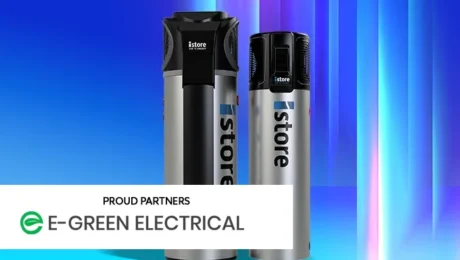
Empowering Australian Homes with Smarter Hot Water Solutions
In an era where energy efficiency and sustainability are paramount, iStore is proud to collaborate with E-Green Electrical, a leading energy solutions provider in New South Wales. Together, we are transforming the way Australians experience hot water—delivering smarter, cleaner, and more cost-effective systems that align with modern living.
Why iStore Heat Pumps?
- At iStore, we harness cutting-edge air-to-energy technology to revolutionize home water heating. Our heat pumps extract ambient air to heat water, significantly reducing reliance on traditional energy sources. This innovative approach offers:
- Substantial Energy Savings: Reduce hot water energy consumption by up to 70%, potentially saving up to $1,000 annually.
- Eco-Friendly Operation: Lower CO₂ emissions by up to 2.9 tonnes per year, contributing to a greener planet.
- Smart Functionality: Features like hybrid and vacation modes adapt to your lifestyle, ensuring efficiency and convenience.
- Seamless Solar Integration: Optimizes the use of your solar PV system, acting as an effective battery alternative.
E-Green Electrical: Expert Installation Partner
E-Green Electrical stands out as a trusted partner in delivering energy-efficient solutions across New South Wales. Their commitment to sustainability and excellence makes them an ideal collaborator for iStore. By choosing E-Green Electrical for your iStore heat pump installation, you benefit from:
- Professional Expertise: Certified technicians ensure high-quality installations tailored to your home’s requirements.
- Comprehensive Services: From initial consultation to post-installation support, E-Green Electrical provides end-to-end solutions.
- Access to Incentives: Guidance on available government rebates and incentives to maximize your investment.
Discover more about E-Green Electrical‘s offerings and how they can assist in enhancing your home’s energy efficiency by visiting their website: https://e-greenelectrical.com.au/
A Sustainable Choice for the Future
The partnership between iStore and E-Green Electrical exemplifies a shared vision of promoting sustainable living through innovative technology. By upgrading to an iStore heat pump, you’re not only investing in a superior hot water system but also contributing to a more sustainable future.
Experience the benefits of advanced energy solutions and join the movement towards a greener Australia.
Ready to make the switch? Explore our range of heat pumps and find the perfect fit for your home at
- Published in General
iStore Battery Solutions: Your Key to Energy Independence in 2025
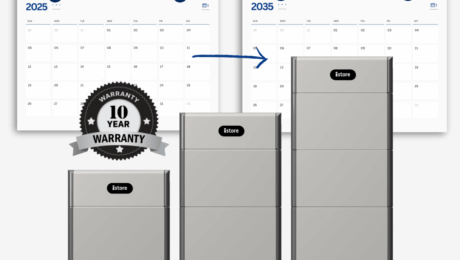
Energy Independence and Sustainable Living
Energy prices keep rising, so households in Western Australia are looking for ways to control their bills and cut emissions. When you install a home battery system, you store more of your own solar energy instead of buying power from the grid.
Right now, the WA Residential Battery Scheme and the Federal Government’s Cheaper Home Batteries Program give you access to rebates and interest-free loans. These incentives lower your upfront costs and make the move to energy independence much easier.
Financial Incentives for Home Battery Storage
On 1 July 2025, the Federal Government launched the Cheaper Home Batteries Program. This program:
- Supports battery systems up to 50 kWh
- Covers about 30% of the system cost
- Uses battery STCs under the same framework as solar panel rebates
- Does not force you to join a Virtual Power Plant (VPP)
In Western Australia, the WA Solar Battery Rebate offers eligible households up to $1,300 when they join the Synergy VPP.
You can often combine the federal rebate with state rebates, so you reduce the upfront price even further when you choose an iStore solar and battery system.
In New South Wales, the Government now offers an incentive of up to $1,500 to help households and small businesses add battery storage. Like the WA program, you need to sign up to a VPP to unlock this support.
When you invest in iStore products, you can:
- Save around $3,000 per year on your energy bills with an iStore solar and battery system
- Cut your hot water heating costs by up to 70%
Why Choose iStore Batteries?
iStore is a proud Australian brand. Our local team provides fast, knowledgeable support and after-sales service across Australia.
iStore batteries work seamlessly with:
- Huawei and iStore inverters
- Electric vehicle (EV) chargers
- Award-winning iStore hot water heat pumps
This compatibility lets you build a complete home energy solution from one brand. You can power your home, charge your EV and heat your water more efficiently, all while reducing your reliance on the grid and supporting a more sustainable lifestyle.
Comprehensive Product Range
iStore offers a full range of products designed to enhance your energy efficiency:
iStore Batteries: Our smart battery systems are available in a wide range of capacities from 5 kWh to 60 kWh. This provides you a large range to choosing the battery that suites your needs. One of the key advantages of iStore batteries is the ability to expand your capacity in increments of 5 kWh. This modular approach provides flexibility as your energy requirements grow, unlike other brands that may not offer such scalability.
iStore Hybrid Inverters: Compatible with both iStore and Huawei systems, our inverters provide seamless integration and optimal performance for your solar setup.
iStore Branded EV Chargers: Charge your electric vehicle efficiently with our advanced iStore branded EV chargers. EV Chargers are designed to work perfectly with your iStore battery and inverter systems.
Award-Winning iStore Hot Water Heat Pumps: Our hot water heat pumps utilise renewable energy to heat your water, further reducing your reliance on the grid and lowering your energy bills. These heat pumps have received accolades for their efficiency and performance.
Backup Box: iStore batteries can be paired with iStore’s backup box. This enables your iStore hybrid inverter to simultaneously charge your battery while powering your home. This feature ensures that you have a reliable energy source during outages, enhancing your energy independence and peace of mind.
Exceptional Australian-Based Support
iStore is committed to providing timely and comprehensive support to all of our customers. Our Australian-based team is dedicated to ensuring that you receive the assistance you need, from initial inquiries to after-sales service. As a result, this commitment to customer care sets us apart and ensures that you can rely on us for all your questions and concerns.
How to Get Started
Assess Your Current Setup: Gather data from your electricity bills and work with an accredited installer to determine what size battery is right for your household. Read over your bill and get familiar with your average usage, which is your kWh or units over your billing period. Know how much you pay per unit (or kWh).
Choose iStore Products: Our batteries are modular allowing you to expand as you grow. Think big as most rebates are one time only – after you have used your battery STCs rebate you can’t claim another rebate for the same address. Since the federal rebate is calculated on the size of your battery, it makes sense to take the opportunity to future proof your home by factoring in any expected energy increases in the future (think growing your family, getting an EV etc).
Get Professional Installation: Work with a Clean Energy Council (NETCC) accredited installer to ensure compliance and eligibility for rebates.
Submit Your Application: Apply for the WA Solar Battery Rebate through the official government portal.
Conclusion
Investing in iStore batteries and our product line-up is not just a smart financial decision; it’s a step towards a more sustainable future. With our comprehensive range of compatible products, financial support available through government rebates, and exceptional Australian-based support, there has never been a better time to make the switch to energy independence.
Choose iStore for a reliable, efficient, and eco-friendly energy solution that grows with you.
Make an enquiry today!
- Published in General
Unlocking the Power of the Sun: How Does Solar Energy Work?
Over 4 million Australian homes now have rooftop solar. That number keeps growing, and for good reason.
With rising energy costs and growing climate concerns, more households are turning to the bright Aussie sunshine to power their homes.
How does solar energy work?
Knowing the answer to this question will give you confidence when choosing a solar setup for your home.
What Is Solar Energy?
Solar energy is the light and heat that comes from the sun.
Solar panels capture that energy and turn it into electricity. This electricity can then power your home’s lights, appliances, and devices.
How Does Solar Energy Work to Produce Electricity?
1. Solar Panels Capture Sunlight
Each solar panel consists of solar cells made from a material called silicon. Silicon is a semiconductor that generates electricity when exposed to sunlight.
When sunlight (made up of tiny energy particles called photons) hits the solar cell’s surface, it excites the electrons in the silicon. This energy causes the electrons to move, creating an electrical flow.
The movement of these electrons generates direct current (DC) electricity.
2. The Inverter Converts DC to AC Power
But! Your home doesn’t use DC electricity; it uses alternating current (AC) power! So what now?
A device called a solar inverter converts the DC electricity into AC electricity. How? By rapidly switching the direction of the DC electricity, turning it from a straight, one-way flow into a wave-like, back-and-forth current.
This wave pattern matches the standard used in the Australian power grid (230 volts, 50 Hz), so the electricity can flow into your switchboard and safely power your home.
3. Your Home Uses Solar Power First
Your solar system prioritises self-generated electricity. That means your home will always use solar power before drawing any energy from the grid. This self-consumption helps reduce how much electricity you need to buy from your energy provider.
So, during the day when the sun is strong, your home will mostly run on solar power, lowering your power bills and your reliance on fossil-fuel-based grid energy.
4. Extra Power Goes to the Grid or a Battery
If your solar panels generate more electricity than your home needs at the time, the extra energy doesn’t go to waste.
Your system can send the excess electricity into the main electricity grid. When this happens, your energy retailer may pay you a feed-in tariff, a small credit on your power bill for each kilowatt-hour (kWh) you send back. The rate varies depending on your provider and the state in which you live.
Alternatively, excess energy can be stored in a solar battery for later use. This stored power becomes useful at night, during blackouts, or on overcast days when your panels aren’t generating enough electricity.
5. The Grid Backs You Up When Needed
Your solar system works during the day when sunlight is available, but electricity use continues well into the evening. When the sun isn’t shining and your panels aren’t producing power, your home still needs a reliable energy source.
If you don’t have a solar battery with stored excess solar energy, your home will automatically draw electricity from the grid whenever your solar production can’t meet your energy needs. No interruption or manual switching is involved; it all happens instantly and seamlessly in the background.
Key Components of a Solar Power System
Solar Panels
Solar panels do the crucial job of capturing sunlight. Each panel is made up of multiple solar cells, usually made from silicon, a material that reacts when exposed to sunlight. This reaction generates direct current (DC) electricity, which begins the process of powering your home.
How many solar panels do you need?
That depends on how much electricity you use and how much roof space you have. Most homes install systems between 5 kW and 10 kW, which generally means 14 to 28 panels, depending on the panel’s wattage (typically 350 W to 400 W each).
Where should you install solar panels?
- Pitched or Flat Roofs: Roof-mounted panels are the most common option. North-facing panels are ideal in Australia because they capture the most sunlight throughout the day. East- or west-facing panels can also work well, if you use more electricity in the morning or afternoon, rather than during the middle of the day.
- Ground Mounts: If roof space is limited or shaded, panels can be installed on ground-mounted frames. These systems require open land and are more common on farms or commercial properties.
- Carports or Pergolas: Panels can also be installed on secondary structures like carports, sheds, or pergolas, provided they get enough sun.
Inverters
Solar panels generate direct current (DC) electricity, but your home runs on alternating current (AC) electricity. An inverter converts DC into AC, making the energy from your solar panels usable for household appliances and devices.
Where is the inverter installed?
Near your switchboard, meter box, or sometimes inside your garage or on an external wall. The installer will choose a shaded, well-ventilated area to prevent overheating and to make the unit easy to access for maintenance or monitoring.
What are the main types of inverters?
- String Inverters: The most common option for residential systems. All panels connect in a single “string,” and the inverter manages the output from the whole group.
Pros: Cost-effective, reliable, easy to service.
Cons: If one panel is shaded or underperforming, it can affect the output of the entire string.
- Microinverters: Installed directly under each solar panel. Each panel has its own mini inverter.
Pros: Allows individual panel performance monitoring and better output if some panels are shaded or facing different directions.
Cons: Higher upfront cost, more components to install and service.
- Hybrid Inverters: A string inverter that also manages solar battery storage. Designed for homes that already have a battery or plan to install one later.
Pros: Battery-ready, more efficient energy management.
Cons: Slightly more expensive than standard string inverters.
How do you choose the right inverter for your home?
Choose
- A string inverter if you have consistent roof sunlight and no major shading issues.
- Microinverters if your roof faces multiple directions or has regular shading from trees or nearby structures.
- A hybrid inverter if you want to install a solar battery now or in the future.
Solar Batteries
Instead of returning excess electricity to the grid, a solar battery stores it for later use: at night, during blackouts, or when your panels aren’t producing enough.
Where are solar batteries installed?
Near your switchboard or inverter, either indoors (like in a garage) or outdoors in a weatherproof enclosure. The location needs to be cool, dry, and well-ventilated.
If your system includes a hybrid inverter, installation is typically simpler because the one device handles both the solar panel output and battery charging.
However, if your system uses a standard string inverter, you’ll usually need a separate battery inverter. This second inverter manages the flow of electricity to and from the battery, charging it when there’s extra solar power and discharging it when your home needs energy.
What are the most common battery sizes?
Battery capacity is measured in kilowatt-hours (kWh), telling you how much electricity the battery can store and later deliver.
Common sizes for Australian homes include
- 5–6 kWh: For small households with low to moderate energy use.
- 10–13 kWh: For average family homes with regular energy use, including evening consumption.
- 15+ kWh: For large homes, households with high energy use, or properties with electric vehicles.
Some systems allow for modular expansion, meaning you can start small and add more storage capacity over time.
How do you choose the right battery size?
That depends on
- Your daily energy usage
- How much excess solar power your system generates
- Whether you want backup power
- Your future plans, like adding an EV or increasing solar panel capacity
Monitoring Tools
Monitoring tools let you track how your solar power system is performing in real time.
They show how much
- Electricity your panels generate
- Your home uses
- Excess energy is exported to the grid
- Charge is in your battery
How do solar monitoring tools work?
Most modern inverters come with built-in monitoring capabilities. These connect to your home’s Wi-Fi and feed data to a mobile app or web portal. From there, you can log in and check your system’s performance anytime, anywhere.
If you’re using an iStore inverter, you can connect it to our WLAN dongle. This small device plugs into your inverter and links it to your home Wi-Fi, enabling full access to iStore’s online monitoring platform.
With the WLAN dongle, you can
- View live and historical solar performance data
- Understand your energy habits and make smarter usage choices
- Track your daily savings
- Maximise savings by shifting high-energy tasks (like laundry or charging an EV) to when solar output is highest
- Monitor how much power you’re exporting or importing
- Receive alerts if something goes wrong with the system
- Track your return on investment over time
Benefits of Using Solar Energy
Cost Savings
Generating solar energy for your home instead of relying solely on electricity from the grid significantly reduces your power bills.
Feeding excess energy back into the grid for a credit on your power bill helps offset the times when you do need to draw electricity from the grid.
Environmental Impact
Solar energy is a clean, renewable source that helps reduce greenhouse gas emissions. By generating electricity from sunlight, solar panels decrease reliance on fossil fuels, contributing to a reduction in air pollution and mitigating climate change.
Between January and March 2025, renewable energy accounted for 43% of electricity used in Australia’s main power grid, highlighting the growing impact of clean energy sources.
Energy Independence
By producing your own electricity, you become less dependent on the main power grid and less vulnerable to energy price fluctuations. This self-sufficiency ensures a more stable and predictable energy supply for your household.
Longevity
Modern solar panels are durable and built to last, typically with a lifespan of 25 years. This long-term investment continues to provide energy savings and environmental benefits for decades.
Government Incentives
The Australian government offers several incentives to encourage the adoption of solar energy.
- Small-Scale Renewable Energy Scheme (SRES): Tradable certificates (STCs) can be sold to offset the upfront cost of installing solar systems.
- Cheaper Home Batteries Program: Launching on July 1, 2025, this program offers up to a 30% reduction in the cost of home battery systems, aiming to support over one million new battery installations across Australia by 2030.
- State-Based Rebates: Various states provide additional incentives. For example, New South Wales offers rebates up to $2,400 for battery installations.
Why Choose iStore for Solar Energy Solutions?
iStore is a proudly Australian-owned, family-run company with over 25 years of experience in the solar and water heating industries. We understand our customers and what they need: affordable, high-quality products backed by strong warranties and local customer support.
Here are the products you can find within our range.
Solar Batteries
iStore solar batteries are scalable, safe, and durable.
Each battery is a stackable unit with a capacity of 5 kWh. Connecting two modules creates a 10 kWh battery, and connecting three modules gives you a 15 kWh battery. You can even connect two sets of 15 kWh batteries to achieve a maximum capacity of 30 kWh. So, no matter how high your energy needs are, we have you covered!
Our batteries are made of lithium iron phosphate (LFP). LFP batteries are known for being safer and more stable than other lithium-ion batteries. They have four layers of built-in protection, including temperature sensors that monitor and adjust the battery’s load to prevent short circuits, overcharging, overheating, and other potential faults.
They can also withstand Australia’s diverse climate, operating effectively in temperatures ranging from -20°C to 55°C.
Hybrid Inverters
iStore hybrid inverters integrate seamlessly with solar panel systems and iStore batteries, creating a complete energy solution that’s efficient and easy to manage.
We offer single-phase and three-phase hybrid inverters to suit a range of energy needs.
Single-phase inverters are ideal for standard homes with typical household energy usage, while three-phase inverters are better suited to larger homes or commercial properties with higher energy loads or appliances that require more consistent power distribution.
Heat Pumps
You can maximise your solar energy use by pairing your solar system with an iStore heat pump. Instead of using electricity from the grid, the heat pump draws power from your solar panels to heat and store water.
Our heat pumps extract heat from the surrounding air to warm the water inside the tank. By using renewable energy from both the sun and the air, iStore heat pumps significantly reduce electricity use and carbon emissions compared to traditional electric or gas water heaters.
The Future of Solar Energy
The future of solar energy is bright!
Solar systems are becoming smarter and more flexible, with better battery storage, more efficient panels, and advanced monitoring tools to help you get the most out of every ray of sunlight.
Government incentives and rebates continue to lower upfront costs, making solar a realistic option for more households.
As energy prices rise and environmental concerns grow, solar energy is set to play an even bigger role in how we power our homes.
FAQs
How Does Solar Energy Work?
Solar panels capture sunlight, and an inverter converts it into electricity. This electricity can then power a home or be stored in a battery for later use.
What Are the Main Components of a Solar Energy System?
The main components of a solar system are solar panels to capture sunlight, an inverter to convert the sunlight into usable electricity, an optional battery to store excess power, and monitoring tools to track system performance.
Can Solar Energy Work at Night?
Solar panels don’t produce electricity at night, but if you have a solar battery, you can use the excess energy stored during the day to power your home after sunset.
If you don’t have a solar battery, your home will automatically draw electricity from the grid at night.
How Efficient Is Solar Energy Compared to Other Renewable Sources?
Solar energy is highly efficient, especially in sunny regions like Australia. While wind and hydro can offer higher output in some settings, solar is more accessible, scalable, and easier to install.
Harness the Power of Solar Energy with iStore
How does solar energy work?
A solar system turns sunlight into electricity to power your home cleanly, conveniently, and cost-effectively.
Ready to make the switch to solar?
Explore the iStore range of smart, reliable solar solutions today. Then, call 1300 515 640 or fill out this online form, and we’ll help you out with expert advice and a free quote.
- Published in General
Sustainable Sun Energy for Eco-Friendly Living
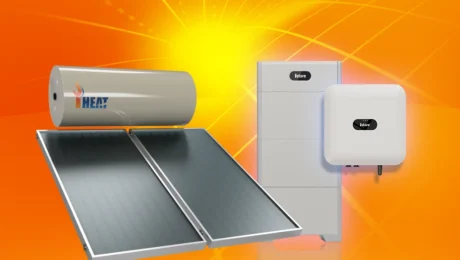
Sunshine isn’t just good for beach days and drying your washing. It’s fast becoming the future of home energy.
Across the world, more and more people are switching to solar. Rising energy costs, climate concerns, and more innovative technology are driving a shift towards cleaner, greener power.
For Aussie homeowners, especially, it just makes sense. We’ve got the sun and roof space, so why keep paying for power the old-fashioned way?
How does sun energy work, what are its benefits, and why is it a smart choice for anyone looking to live more sustainably?
What Is Sun Energy?
Sun energy (or solar energy) is the power we get from sunlight. It all starts in the sun’s core, where tiny hydrogen atoms smash together under extreme pressure and heat. This process, called nuclear fusion, creates helium and releases an enormous amount of energy in the form of light and heat.
That energy travels to Earth as electromagnetic radiation. It includes visible light (what we see), ultraviolet rays (what gives us sunburn), and infrared heat (what warms us up).
Even though the sun is 150 million kilometres away, it delivers enough energy to power everything on Earth.
We can harness sun energy in a few ways.
- Solar Electricity: Solar panels turn sunlight into usable power for your home.
- Solar Hot Water: Systems that use sunlight to heat water.
- Solar Architecture: Home and building designs that make the most of natural light and heat to reduce the need for artificial lighting or heating.
Sun Energy and the Environment
The sun gives us more energy than we could ever use and is completely free. Unlike coal or gas, we won’t run out of sunlight, making solar one of the most reliable and renewable energy sources.
Using sun energy is also much cleaner than traditional power. It doesn’t produce greenhouse gases, so you’re not adding to global warming every time you turn on the lights or run the dishwasher.
By switching to solar, we can move away from fossil fuels, which often involve digging, drilling, and transporting fuel across long distances. That process uses natural resources, pollutes the environment, and strains ecosystems.
Solar panels don’t need water to generate power, so they avoid the water waste and contamination often linked with coal or gas-fired power stations. And because panels can go on rooftops or unused land, they don’t take up space or cause land damage like other energy sources.
Solar panels produce zero emissions while running. Less pollution in the air helps improve public health in communities across the country.
Benefits of Using Sun Energy
What are the advantages of sun energy?
- Reducing High Energy Bills: Using solar energy means you can generate your own power during the day, cutting down how much electricity you need to buy from the grid and saving you money on rising energy costs.
- Increasing Energy Security: By generating solar power, especially with battery storage, you’re less affected by energy price hikes, blackouts, and changes in the energy market.
- Promoting Sustainability: Sun energy is clean and doesn’t produce harmful emissions, so switching to solar lowers your household’s environmental impact and supports a healthier planet.
- Reducing Reliance on Fossil Fuels: The more homes that use solar, the less we need to burn coal and gas, lowering air and carbon pollution and helping Australia move toward a cleaner energy future.
Applications of Sun Energy
Homes
- Solar panels generate electricity to run appliances and charge devices.
- Solar hot water systems use sunlight to heat water efficiently and cost-effectively.
- Battery storage allows households to store excess solar power for use at night or during blackouts.
- Solar-powered smart systems manage energy use more efficiently, lowering costs and boosting self-sufficiency.
Businesses
- Solar installations on warehouses and offices improve green credentials and cut costs by generating cheaper power on-site.
- Solar-powered equipment, such as lighting, security systems, and charging stations, improves energy efficiency and reduces overheads.
Communities
- Solar farms provide large-scale renewable energy to power local areas or feed into the broader grid.
- Community solar projects let residents share the benefits of solar energy without installing panels on their homes.
- Off-grid solar solutions support remote areas with limited access to traditional energy sources.
- Solar-powered public infrastructure, like streetlights, park lighting, and EV charging stations, reduces council energy costs and environmental impact.
Sun Energy Facts
Did you know…
- Australia generates more solar energy per person than any other country.
- There are over 4 million rooftop solar systems installed across the country.
- The rise in solar energy use has helped drive electricity prices down across Australia.
- The average solar-powered household saves over $1,500 a year on electricity bills.
- In 2024, solar power made up 19.6% of Australia’s electricity production in the National Electricity Market and South West Interconnected System.
- Experts predict that by 2050, solar could provide around 50% of Australia’s electricity.
With millions of solar systems already installed and thousands in savings up for grabs, there’s never been a better time to join Australia’s solar-powered future!
iStore’s Sun Energy Solutions
Solar Batteries
A solar battery stores the excess electricity your solar panels produce during the day so that you can use it later, like at night or during a blackout.
We design our solar batteries to be super safe and scalable to suit every home’s energy needs.
iStore batteries are made of lithium iron phosphate (LFP). LFP batteries are known for being safer and more stable than other lithium-ion batteries. They have four layers of built-in protection, including temperature sensors that monitor and adjust the battery’s load to prevent short circuits, overcharging, overheating, and other potential faults.
Each iStore battery is a stackable unit with a capacity of 5 kWh. Connecting two modules creates a 10 kWh battery, and connecting three modules gives you a 15 kWh battery. You can even connect two sets of 15 kWh batteries to achieve a maximum capacity of 30 kWh.
A single 5 kWh battery is ideal for smaller homes of one or two people, while a 10–15 kWh battery is perfect for average-sized homes running major appliances.
Need more backup or have a household with 4–6 people? A 30 kWh setup will give you serious energy independence!
Hybrid Inverters
A hybrid inverter maximises energy efficiency by automatically choosing the best power source—solar, battery, or grid—based on your usage patterns and solar output. This device allows you to use solar power as it’s generated, store the excess in a battery, or export it to the grid. It’s called “hybrid” because it can handle both solar and battery power in one system.
iStore hybrid inverters come in single-phase and three-phase options to suit different household sizes and energy needs.
You can connect your iStore inverter to our WLAN dongle. This small device plugs into your inverter and connects it to your home Wi-Fi, giving you full access to the iStore online monitoring platform.
With the WLAN dongle, you can
- View real-time and past solar performance data
- Understand your energy habits and make better usage choices
- Track your daily energy savings
- Monitor how much energy you’re exporting to or drawing from the grid
- Receive instant alerts if something goes wrong with your system
Heat Pumps
You can further maximise your solar energy by pairing an iStore heat pump with your solar system. Instead of using electricity from the grid, the heat pump draws power from your solar panels to heat and store water.
Our heat pumps extract heat from the air to warm the water inside the tank. By using renewable energy from both the sun and the air, iStore heat pumps significantly reduce electricity use and carbon emissions compared to traditional electric or gas water heaters.
EV Chargers
An EV charger supplies electricity to charge the battery in an electric vehicle.
With an iStore EV charger, you can power your vehicle using the free energy produced by your solar panels. It’s a sustainable and convenient way to charge at home with no fuel costs, no emissions, and no waiting around at public stations.
Why Choose iStore?
We are committed to sustainability, designing products that make the most of renewable sun energy while reducing your carbon footprint.
Our focus on quality means you get reliable, long-lasting technology. Every iStore product is backed by a strong warranty and tested for Australian conditions.
We believe sustainable energy should be accessible to everyone, so we offer affordable energy solutions that deliver upfront and long-term savings.
Steps to Transition to Sun Energy for Your Home
- Evaluate Your Home’s Energy Needs. To choose the right size system for your home, look at your electricity bills to understand how much energy you use daily, weekly, and seasonally. Also, consider your household size, appliance usage, and future needs, like adding an EV or battery.
- Choose the Right Inverter. You need a hybrid inverter that matches your system size and supports future upgrades. If your home has high energy demands or three-phase power, make sure your inverter can handle it.
- Install the Solar System. Always use a professional, accredited installer. Proper installation ensures your system is safe, compliant with Australian standards, and protected by its warranty.
- Monitor and Optimise Energy Usage. Use monitoring apps to track your solar output, battery storage, and energy habits. You can see when your solar production is highest and shift high-energy tasks like laundry, heating, or EV charging to those times to get the most out of your system.
FAQs
How Does Sun Energy Benefit the Environment?
Sun energy is clean, renewable, and produces no harmful emissions. It reduces air, water, and land pollution, cuts down greenhouse gas emissions, and helps preserve natural resources.
Is Sun Energy Cost-Effective for Homes?
Sun energy can significantly reduce electricity bills in the face of rising power costs, offer long-term savings, and increase home value.
Can I Store Sun Energy for Nighttime Use?
Yes, your solar battery can store excess energy generated during the day for later use at night.
How Much Does It Cost to Install a Solar Energy System?
Costs vary depending on system size, setup, brand, and government rebates, but a complete home solar system can range from $3,000 to $12,000.
Power Your Home with Sun Energy Today
How does the sun create energy?
By releasing an endless supply of heat and light.
This free energy beams down on your roof every day—why let it go to waste? Let iStore help you make the switch to sustainable, solar-powered living today.
Explore our range of high-quality and affordablesolar inverters, batteries, heat pumps, and EV chargers to kickstart your renewable energy journey. Then, call 1300 515 640 or fill out this online form, and we’ll help you out with expert advice and a free quote.
- Published in General
What Is a 3-Phase EV Charger? Benefits, Charging Speed, and Installation
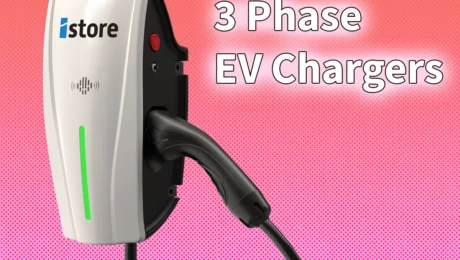
Charging your electric vehicle (EV) shouldn’t feel like waiting for paint to dry. You’ve got places to go and people to see! If charging via your current setup seems to take forever, it’s time to level up.
As EVs surge in popularity across Australia, so does the need for faster, smarter charging at home and at work.
3-phase EV chargers deliver more power, cut down charge times, and keep up with your lifestyle or business demands.
If you want to know what a 3-phase EV charger is, how it boosts charging speed, and what’s involved in installing one, you’re in the right place!
How Does a 3-Phase EV Charger Work?
A 3-phase EV charger uses a 3-phase power supply, which sends electricity through three separate wires at the same time. Because more power flows to your EV, it charges much faster than standard single-phase setups.
Think of it like filling up a water tank with three hoses instead of one!
Most modern EVs are designed to handle 3-phase charging, so you don’t need to worry about whether your car can keep up. And if your home or commercial site already has 3-phase power installed, you’re in a great position to take advantage of the faster charging a 3-phase EV can offer.
Benefits of 3-Phase EV Chargers
Faster charging isn’t the only advantage of 3-phase EV chargers.
- Efficiency: Higher power delivery means less energy loss during charging and less time drawing power from the grid, making your charging setup more energy-efficient overall.
- Scalability: Great for growing households or expanding commercial fleets. A 3-phase setup can handle multiple EVs and future upgrades without major changes to your existing electrical infrastructure.
- Future-Proofing: EV batteries are getting bigger. Installing a 3-phase charger now means you’re ready for the next generation of electric vehicles if you decide to upgrade your EV in future.
- Versatility: Perfect for both residential and commercial use, especially when faster turnaround times are essential, such as for households with multiple EVs, rideshare drivers, delivery vans, or business fleets.
- Compatibility with Solar: If you’ve got solar panels and a 3-phase solar inverter, you can make use of your available solar energy for more efficient and sustainable charging, reducing reliance on the grid and cutting energy costs.
Charging Speeds: 3-Phase vs. Single-Phase
Just how much faster can a 3-phase EV charger charge than a single-phase charger?
Single-phase chargers typically offer power outputs between 3.6 kW and 7.4 kW. Charging a 60 kWh battery with a 7.4 kW charger takes approximately 8 hours.
3-phase chargers can deliver between 11 kW and 22 kW, reducing the charging time for the same 60 kWh battery to about 3 hours. That’s almost 2.5 times faster charging!
Benefits of Fast Charging
Faster charging can make a big difference to your daily life.
- Convenience: Spend less time waiting and more time driving. Ideal for busy families, shift workers, or anyone on the go who needs to charge between school runs, meetings, or deliveries.
- Less Range Anxiety: Planning a road trip? Faster charging means shorter stops along the way and more confidence when driving longer distances.
- Easier Charge Sharing: In households or businesses with more than one EV, faster charging helps avoid delays and makes it easier to share a charger.
- More Flexibility: You’re not tied to charging overnight. You can plug in during the day and still get a full charge in just a few hours.
- Keeps Your Business Moving: For businesses, fast charging means less downtime for vehicles and more time on the road, boosting productivity and profits.
It’s important to know that fast charging can increase power consumption, so consider your energy needs and budget before investing in a 3-phase EV charger.
Who Should Consider a 3-Phase EV Charger?
| Typical User Situation | Single-Phase EV Charger | 3-Phase EV Charger | Reason |
| Single EV household | ✓ | Lower cost and sufficient overnight charging | |
| Apartment or townhouse with limited power | ✓ | Fits standard residential power supply and is easier to install | |
| Home or business with multiple EVs | ✓ | Supports faster charging and simultaneous charging of multiple vehicles | |
| Rideshare or delivery driver working daily | ✓ | Faster charging between shifts or during short breaks | |
| EV owner with residential or commercial solar energy setup | ✓ | Maximises the solar energy available from a 3-phase inverter for more eco-friendly and cost-effective charging | |
| Public or shared EV charging stations | ✓ | Ensures quick charging turnaround and high availability for multiple users |
How to Install a 3-Phase EV Charger
Site Assessment
Before installing a 3-phase EV charger, the first step is to check whether your property has 3-phase power available. Many newer homes and commercial buildings do, but older properties may only have single-phase power.
3-phase chargers require a compatible electrical supply. If your property doesn’t have a 3-phase system, an upgrade may be possible, but it will involve added costs and coordination with your energy provider.
A licensed electrician will carry out the site assessment. They’ll inspect your switchboard, meter, and main power supply to confirm whether 3-phase is installed and meets the EV charging requirements. If not, they can advise on what upgrades are needed and provide a quote.
It’s also a good time to assess things like charger placement, cable runs, and whether solar integration is part of the plan.
Equipment
You’ll need
- A 3-Phase EV Charger: Compatible with 3-phase power and supporting your EV’s onboard charging capacity.
- Wiring and Circuit Protection: Heavy-duty cabling rated for higher current, along with proper circuit breakers and safety switches.
- Mounting Hardware: Secure and weather-resistant hardware for wall-mounting or a stand.
Professional Help
Installing a 3-phase EV charger is not a DIY job! It involves working with high-voltage power and must comply with Australian electrical standards. Hiring a licensed electrician is non-negotiable.
They will make sure your setup is safe, reliable, and suited to your power supply and charging needs. They’ll also take care of any required certifications or paperwork.
What does the installation process involve?
Your installer will
- Confirm that your property has 3-phase power and that your switchboard is compatible.
- Install the charger, wiring, and any necessary safety devices, like circuit breakers or RCDs (safety switches designed to prevent electric shock).
- Secure the charger to a wall or stand in the chosen location (usually near your parking area).
- Connect the charger to your power supply and run safety and performance tests.
- Integrate the charger with your solar energy and battery system, if you have one.
- Show you how to use the charger and explain scheduling or solar integration features.
- Sign off on any required documentation to confirm the installation meets Australian standards.
Costs
The cost to install a 3-phase EV charger varies based on charger type, existing electrical infrastructure, and installation complexity.
3-phase EV chargers range from $1,000 to $1,300, depending on brand, features, and power output. Chargers with app control, load balancing, or solar integration may cost more but offer added convenience and efficiency.
General installation costs are as follows:
- Basic Installation: $500–$1,000 for properties with existing 3-phase power and minimal modifications needed.
- Complex Installation: $1,000–$2,500 for setups requiring longer cable runs, switchboard upgrades, or other modifications.
- 3-Phase Power Upgrade: $1,000–$3,000 to upgrade a property to 3-phase power, depending on location and existing infrastructure.
So, if your property has existing 3-phase power, the total cost can range from $1,500 to $2,300.
If the installation is complex or your property needs a 3-phase power upgrade, the total cost can be between $2,000 and $3,300.
Keep in mind that some states and territories offer rebates or incentives for EV charger installations. Check local programs to see if you’re eligible.
FAQ
Do I Need 3-Phase Power for an EV Charger?
You need a 3-phase power supply to install a 3-phase EV charger for faster charging.
A single-phase power supply is sufficient for standard home charging using a single-phase EV charger.
How Fast Is a 3-Phase EV Charger?
An 11–22 kW 3-phase EV charger can charge a 60 kWh battery in about 3 hours. That’s up to 2.5 times faster than a single-phase charger.
Can I Install a 3-Phase EV Charger at Home?
If your home has a 3-phase power supply, a licensed electrician can install a 3-phase EV charger. If not, you’ll need to upgrade your electrical system.
How Much Does It Cost to Install a 3-Phase EV Charger?
If your home already has 3-phase power, installation typically costs $1,500 to $2,300, including the charger.
If a power upgrade is needed, the total cost can rise to $2,000 to $3,300, depending on the setup and location.
Upgrade to a 3-Phase EV Charger With iStore
Power up in less time and keep moving with a 3-phase EV charger. You’ll get faster, more convenient top-ups and room to grow—perfect for busy households and businesses.
At iStore, we don’t just supply EV chargers; we deliver trusted, high-quality EV charging solutions backed by expert installation and support.
Explore the best 3-phase EV charger in Australia from iStore. Then, get in touch for advice or a quote by calling 1300 515 640 or filling out this online form.
- Published in General